Nothing is better than a delicious cup of coffee in the morning, but then your coffee begins to take forever to brew and tastes bitter. The reason is that your machine has mineral scale buildup inside of it. The solution is simple, you need to remove the mineral scale.
The good news is that you don’t need to run out to purchase a commercial cup of coffee when there’s an easy solution to fix your residential Bunn Coffee Maker. So, here are the directions you need on how to clean a Bunn coffee maker to keep your coffee tasting great.
Key Takeaways
- Clean your Bunn coffee maker with a vinegar solution (1 part vinegar, 2 parts water) to remove mineral scale and improve taste.
- Use the Bunn deliming tool or a toothpick to remove mineral deposits from the water tube and spray head.
- Descale your machine every 2 to 3 months or more often if you have hard water, to keep your coffee maker functioning efficiently.
- Perform routine cleaning daily, including wiping down the exterior, cleaning the carafe, and checking the spray nozzle for deposits.
How to Clean Coffee Maker Using Bunn Deliming Tool
Bunn Coffee Makers usually come with accessories, one of which is the Bunn deliming tool. Deliming removes the mineral scale that builds up in your coffee maker. The deliming tool will remove any mineral scale that has built up inside the coffee maker’s water tube.
Your machine will work better and last longer if you delime your machine every 3 months. This is an easy task to complete that will ensure your coffee brews quickly and tastes great.
- Time: 2-3 hours
- Difficulty: Beginner
What You’ll Need
- Bunn Deliming Tool
- Dish soap
- Toothpick
- Soft cloth
1. Unplug Bunn Coffee Maker
The first step is to unplug your Bunn coffee maker and let it cool for 2 hours or more before you attempt to delime your machine.
2. Remove Brewing Filter and Spray Head
You’ll need to remove the carafe and the brew filter in order to access the spray head. Now remove the spray head by unscrewing it in a counterclockwise direction. Once the spray head is removed, set it aside. You should see a tube or hole for water.
3. Insert Bunn Deliming Tool

Insert the Bunn Deliming Tool into the hole behind the spray nozzle. It will need to be inserted at least 6 inches. You’ll also need to ensure that 2 inches remain outside the hole.
You’ll use these two inches to control the deliming tool.
4. Remove Mineral Scale
Move the deliming device in and out of the tube. You may need to apply some gentle force and possibly twist the deliming device in order to fully remove all the mineral scale inside the tube. Move it back and forth at least 5 times before you pull the deliming device out of the tube.
5. Rinse Your Machine
Do not plug your machine in or replace the spray head at this time. Fill your carafe with water and put the brew filter on your machine. Pour the water in your carafe into the reservoir of your coffee maker.
Only close the lid after placing the carafe back on the hotplate to catch the water. The water will drain from the reservoir into the carafe, rinsing the tube and removing any loose mineral scale.
6. Clean Spray Head
Wash the spray head with water and dish soap using a soft cloth. Rinse the spray head. Check to see if any of the holes in the spray head are clogged. If so, use a toothpick to gently reopen the holes. Rinse the spray head again.
7. Return Spray Head
Screw the spray head back into place when you’ve finished cleaning it, then replace the brewing filter. Plug your Bunn coffee maker in again and turn it on. Give your machine 15 minutes to reheat the water before brewing any coffee.
Pro Tips
- If you discover that your drip coffee is taking longer to brew or it’s not pumping water, you may have hard water. This means that you’ll need to delime your machine more often than every 2 or 3 months. Instead, you may need to delime your Bunn coffee maker every month or twice a month if your water is very hard.
- If the carafe will not come clean using dish soap and warm water, try troubleshooting by using ice, salt, and lemon juice. First, fill the carafe halfway with crushed ice. Sprinkle 2 or 3 tablespoons of salt on the ice and a squeeze of lemon juice.Let it sit overnight. In the morning, wash the carafe. It should be sparkling clean.
How To Descale A Bunn Coffee Maker With Vinegar
Water leaves a fine layer of minerals in the machine every time you brew a cup of coffee. These minerals will cause your coffee to become bitter and may increase the length of your brewing time. So, you’ll need to descale your machine to remove the mineral scale every 2 to 3 months.
White vinegar is an excellent cleaning agent to use, as it’s cheap and easily available. All you need to do is dilute it with water to make your cleaning solution.
- Time: 3 hours
- Difficulty: Beginner
What You’ll Need
- Spray head cleaning tool or toothpicks
- White vinegar
- Distilled or purified water
- Dish soap
1. Mix Solution & Add to Reservoir
Mix equal parts of white vinegar and water in the carafe. Add the mixture to your carafe. Pour this solution into the reservoir of your coffee maker and then place the carafe back on the hotplate to catch the cleaning solution.
Now close the lid.
2. Start a Brewing Cycle
Start the brew cycle of your coffee maker, but only let it brew for half of the time. Turn off your coffee maker. The cleaning solution is now in all the parts inside your machine.
Allow your coffee maker to sit for 2 hours. This will give the cleaning solution time to dissolve mineral deposits and kill any bacteria in your machine.
3. Discard Cleaning Solution
Your carafe will now be filled with a dirty-looking cleaning solution. Discard this solution by pouring it down your sink.
4. Clean Spray Head and Fittings
Remove the brew filter to access the spray head of your machine. Remove the spray head by turning it counterclockwise.
Check to see if any mineral deposits are clogging it. Now use the pointed end of the sprayhead cleaning tool to remove any mineral deposits from the holes. Use the spray head tool’s long end to clean the spray head and bypass fittings.
If you don’t have the sprayhead cleaning tool, use a toothpick instead to clean the spray head and bypass fittings.
After you’ve cleaned the spray head, wash it with warm soapy water. Leave it on the counter to dry. Do not return it to the machine yet.
5. Finish Brewing Cycle
Ensure that the carafe and the brew filter are back in place on your machine before you turn the machine on to finish the brewing cycle. Discard the vinegar solution in the carafe when the brew cycle is done.
6. Rinse Machine
Clean your carafe by washing it in warm soapy water and a rinse. Then fill it with water and pour the water into your reservoir. Brew the water.
You will be running 2 or 3 of these rinse cycles until the odor is gone. This way you won’t taste the vinegar when you brew a fresh cup of coffee.
7. Replace Spray Head
After you’ve rinsed your Bunn coffee maker, remove the carafe and brew filter. Replace the spray head.
Your machine is now ready to brew a delicious cup of coffee.
Pro Tip
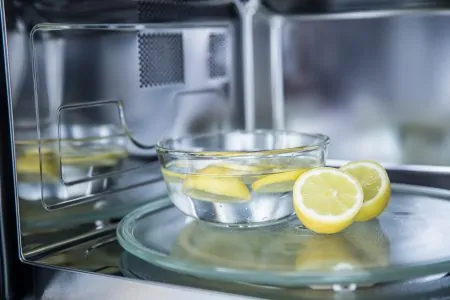
Lemon juice has the advantage that it doesn’t have the strong odor that vinegar does, nor will it add an odd flavor to your coffee if it isn’t fully rinsed out of your machine.
Routine Cleaning Tips
Routine cleaning should be done every day that you use your machine. This is to ensure that your coffee maker keeps working well. It will also keep your coffee tasting great between descalings. In addition, routine cleaning will help to maintain your machine.
- Time: 15-20 minutes
- Difficulty: Beginner
What You’ll Need
- Soft cloth
- Dish soap
- Toothpicks
- Tube cleaning tool
1. Turn the Machine Off
Turn your machine off before you begin cleaning your Bunn coffee maker.
2. Remove Filter
Remove the brew filter and discard the leftover coffee grounds. Wash the brew filter with soapy water and rinse. Leave it on your counter to dry.
3. Wipe Down Exterior
Wipe down the exterior of your coffee maker with a soft damp cloth.
4. Clean and Soak the Carafe
Wash the carafe with soapy water and rinse it. If there’s built-up coffee, you can fill the carafe with soapy water and let it soak for a bit. This will help to loosen the coffee buildup and make it easier to remove.
5. Clean Spray Nozzle
Remove the spray nozzle (or spray head) and examine it for deposits. If you see some, use a toothpick to remove the deposits. Use a damp cloth to wash the spray nozzle with soapy water. Rinse the nozzle.
6. Clean Spray Tube
While the spray nozzle and brew funnel are removed, this is a great time to clean the spray tube. Insert most of the tube cleaning tools into the tube. You’ll want to leave 2 inches outside the tube for you to hold.
Now push the cleaning tool back and forth while rotating it slowly. When you’re finished, pull out the cleaning tool. Replace the spray nozzle and brew funnel of your machine.
Pro Tip
Baking soda is a gentle abrasive that will remove the grime. When you’re finished, use a clean damp cloth to remove the paste.
FAQs About Cleaning A Bunn Coffee Maker

How Often Do You Clean A Bunn Coffee Maker?
You’ll want to complete the regular clean daily or whenever you make a pot of coffee. However, you’ll only need to deep clean, descale, and delete your coffee brewer every 3 months unless you have hard water. Hard water has more minerals in it causing machines to need to be cleaned more often.

How Do You Clean A Bunn Coffee Maker Without Vinegar?
Baking soda can be used to clean a Bunn coffee maker without vinegar. For every cup of water, you’ll need to add ¼ cup of baking soda. Then follow the instructions for cleaning a coffee maker with vinegar.
You will need to ensure that you’ve fully rinsed the baking soda from your machine when you’ve finished cleaning as it will cause an odd taste in your coffee.
Another alternative is to use lemon juice to clean a Bunn coffee maker without vinegar. Simply replace the vinegar with lemon juice, and follow the instructions. The coffee maker will be much easier to rinse as the lemon does not leave an odd taste in your coffee.

How to Tell If Your Coffee Maker Needs To Be Cleaned?
You can tell if your coffee maker needs to be cleaned if it’s taking a long time for coffee to brew or if your coffee tastes bitter. It’s time to deep clean and descale your coffee maker.

How Long Does a Bunn Coffee Maker Last?
Knowing how long a Bunn coffee maker lasts can help you decide where to spend your money. They are known for reliability, so you should expect your new coffee maker to last eight to ten years.

Can You Use CLR In a Bunn Coffee Maker?
You can use CLR (Calcium, Lime, Rust) in your Bunn coffee maker, provided that you follow the instructions on the packet and the coffee maker. CLR is a powerful cleaning agent that can remove mineral deposits inside the machine, but it can also damage the internal components.

How Do I Reset My Bunn Coffee Maker After Cleaning?
You can reset your Bunn coffee maker after cleaning by pressing the “H” and “M” buttons simultaneously for three seconds.
In Summary
It’s important to ensure that your Bunn coffee pot is cleaned regularly. Cleaning it regularly will ensure that you’ve removed all the mineral deposits and that your coffee tastes delicious in the morning. Descaling your machine regularly will also help your drip coffee pot last longer.
Make a cleaning solution of 1 part vinegar and 2 parts water. Add this to the reservoir. Put the carafe on the hot plate before you begin the brewing cycle. Stop the brewing cycle when it’s about halfway through the cycle. Let the machine sit for 2 hours. After 2 hours, remove the spray head and check to see if it has any mineral deposits clogging it.
If so, remove them with a toothpick. Wash and rinse the spray head. Do not replace the spray head. Finish the brewing cycle. Rinse the machine at least 2 or 3 times, until you can no longer smell vinegar. Then replace the spray head.
Your Bunn coffee maker is now ready to brew you a fresh pot of coffee.