If you’re looking at shopping for a new washer and dryer, it helps to know how much a washer and dryer is. You might also be interested to know how bundles and sets will affect the price and whether it’s more affordable to purchase a used appliance versus a new appliance.
This is why we’re discussing how much a washing machine and a dryer cost and some tips to save money.
Key Takeaways
- New washing machines cost between $450 and $3500, while dryers range from $390 to $3000.
- Washer and dryer combos have an average cost of $1100, with prices varying based on type, capacity, and features.
- To save on costs, shop during sales, compare prices online, and purchase a washer and dryer together.
- Washers and dryers typically last for 10 years, with brands like Miele and Speed Queen lasting even longer.
How Much Does a Washer and Dryer Cost?
A new washer will cost you somewhere between $450 and $3500 to purchase, however, the average price is $700. A new dryer will cost between $390 and $3000 to purchase. The average cost of a dryer is also $700.
If you’re purchasing a washer-dryer combo, expect to spend between $750 and $4000. The average price for a combo is $1100.
Average Washer and Dryer Cost
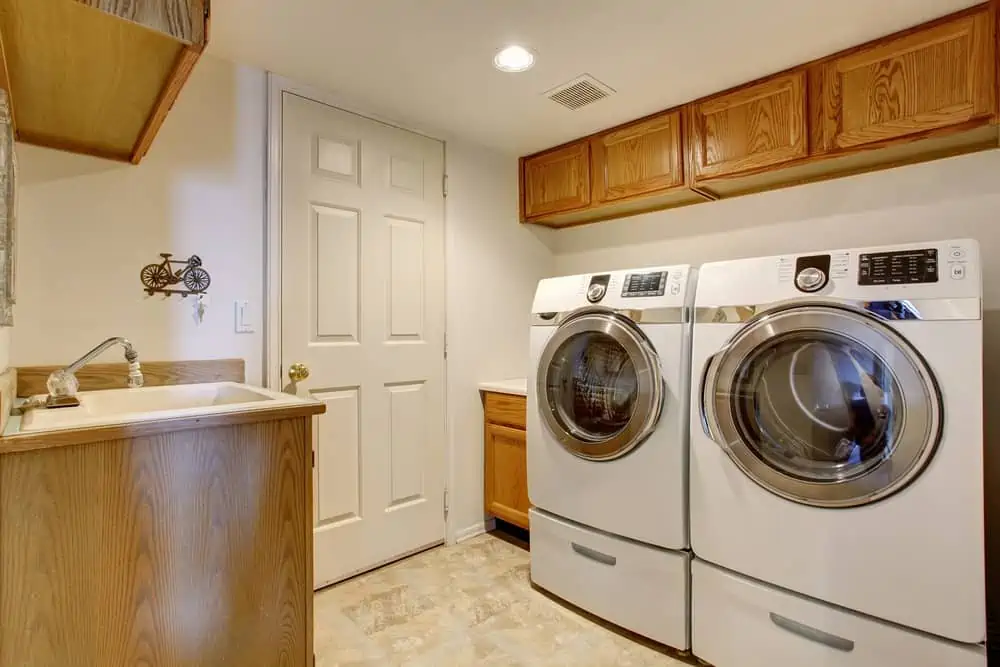
Several factors affect how much a washer and dryer cost. This includes the type of washing machine, the type of dryer, the capacity, the finish, and the extra functions you’d like your machines to include.
By Washer Type
As you’re looking for a new machine, you’ll find two main types of washing machines. The top load washer and the front load washer.
The top loader is a traditional laundry machine that uses agitation techniques to clean clothing. Newer top load machines may have an impeller rather than an agitator which allows them to use less water and energy to wash your clothing. The top load machines are usually less expensive than the front load washers.
The front load machines use a paddle technique to wash clothing. They use less water and energy than the top loaders but also have longer wash times. You can expect to spend at least $300 more for a front load washer than you would for a similar top load washer.
The top loader wash and dryer combos are pricier than you will spend for separate units. You will pay between $750 and $2400 for the combo. If you’d like a front load washer instead of a top load washer, the price will increase.
Compact washers have a wide range of prices. You may pay as little as $200 for a tiny portable washing machine up to $2050 for a 24-inch front load, energy start machine that includes a stainless steel exterior and tub.
A stacked washer-dryer unit will range from $750-$2000 with most of the units falling under $1300.
An all-in-one washer-dryer unit where the washing and drying take place in the same tub will range from $700 for a compact model to $1700 for a full-size model with multiple wash cycles.
By Dryer Type
As you’re shopping, you also have a choice of dryer types to choose from.
Electric dryers are simple dryers that you plug into an electrical socket. They are popular and don’t require gas refills, but they will increase the cost of your utility bills. Most electric dryers require a vent.
Ventless dryers are dryers that use condensation to dry the clothing by removing the moisture from the air. They do not require a vent.
Gas dryers will use gas to heat the air instead of electricity. This is convenient if you live in a remote area where you don’t have a power connection or the power is unreliable. They usually cost about $50-$100 more than an electric dryer. However, they cost less to operate.
Compact dryers are small dryers that sell for $300 for a basic machine to $1750 for an electric dryer with all the bells and whistles.
By Capacity
The capacity of the washing machines you’re considering will also affect the cost as a larger capacity is more expensive than a machine with a small capacity. However, a larger household with 6 or more people will require a larger machine than a household of 1 or 2 people.
Compact washers and dryers range from $500-$3000 and are great for small spaces such as condos, mobile homes, and apartments.
Full-size washers and dryers are sized for a standard household of 3-5 people. The price ranges from $700-$2200.
The high-capacity washers and dryers are perfect for larger families of 6 or more people. However, you can expect to spend between $1600 and $3800 for the washer and dryer.
By Finish
Washers and dryers have different finishing materials used on the machines, so you’ll find a variety of styles to choose from. However, the finishing material will affect the cost of the machine.
The white and black washing machines are usually cheaper than the other finishes. White is a classic look, but it can be outdated if you don’t periodically change the decor in your laundry room. Black is a modern look that doesn’t show grime easily, but you’ll need to clean it regularly.
The stainless steel is a more expensive option that looks nice in a laundry room, but it does smudge and shows fingerprints easily.
The black stainless steel is a popular finish. It doesn’t show fingerprints, streaks, smudges, or water spots easily. However, it will scratch. It’s also more expensive than the basic white and black finishes.
A newer champagne finish is available. It adds an intriguing and unique color to your laundry room. It’s also a more expensive finish to purchase.
The chrome is a modern finish. It smudges easily but you’ll find that it’s easy to clean. The chrome finish is a more expensive finish to purchase.
By Brand
Popular brands such as Speed Queen and Bosch tend to be more expensive than the lesser-known brands such as Crosley and Kenmore. Whirlpool and Samsung brand machines tend to be less expensive than Speed Queen and Bosch, but more expensive than Crosley and Kenmore machines.
Additional Washer and Dryer Costs
When you’re planning on purchasing a washer and dryer, there are extra costs that you should factor into your budget.
Cost of Installation
You will need to install the washer and dryer in your laundry room. If you are remodeling the laundry room, expect the cost to rise as a custom cabinet will be more expensive to build than simply adding the washer and dryer.
Also, washers and dryers need fixtures such as vent tubes and intake hoses. It’s recommended you install new tubes and hoses when you install your washer.
This will add to the cost especially if you need a professional to install the machines. However, stores will sometimes offer free hookups or low-cost installation when you purchase your machines. So be sure to ask about delivery and installation when you buy your washer and dryer.
Electricity Cost
In addition to the cost of installation, you will need to budget for the utility costs to run your machines. Expect to spend between $150 and $250 a year to run your washer and dryer. Of course, this depends on how many loads you run as well as how much water, electricity, and gas are required to run your specific machines.
Optional Features
There are several optional features that you may choose to purchase. These features will add to the cost of your washer and dryer.
The steam washer and dryer feature uses less water and will dry your clothing more efficiently. In the long run, you’ll find that it’s more economical to use.
The smart washers and dryers include Bluetooth and Wi-Fi which will allow your machines to connect to your smartphone.
You might also choose to purchase a quiet washer and dryer which uses special technology to decrease the vibrations and lower the noise.
HE washing machines are energy efficient. They use less water and power than a non-HE machine, as a result, this will lower your monthly utility bill.
How Much Electricity Do Washers and Dryers Use?
Most washing machines will use between 400 and 1300 watts to run a wash cycle. The average energy star machine will use 500 watts to run a wash cycle. A dryer will use between 1800 and 5000 watts to dry a load of clothing with 3000 watts being the average.
Price of Used Vs New Washers and Dryer
The price of a used washer and dryer will often be less than half of the cost of a new washer and dryer. However, there will not be a warranty available in case something goes wrong with your washer or dryer in the first few months.
How to Save Costs On a Washer and Dryer
There are a few ways to save money when you’re buying a washer and a dryer.
- Shop during national holidays to take advantage of the sales.
- Sign up for email alerts from your favorite appliance stores so you’re notified about any sales that may be happening.
- Shop around online before heading to one of your local stores.
- Purchasing a washer and dryer together will often save you some money as well.
Here are a few tips to help you save money on ongoing laundry costs.
- Wash your clothing with cold water.
- Wait to run a load of laundry until you have a full-sized load.
- Air dry your clothing when possible.
- Do not stuff your dryer full of clothing. It will take longer to dry and use more electricity.
- Clean the lint filter on your dryer after every load to promote good airflow.
- Clean your vent periodically. This will also improve your dryer’s airflow.
How Long Do Washers and Dryers Last?
Washers and dryers last for 10 years on average.
FAQs

Why Are Dryers So Expensive?
Dryers are so expensive largely due to the cost of the material to make the dryers. In addition, there is the rising cost of manufacturing and transportation which also add to the cost of a dryer.

Is It More Expensive to Buy a Side-By-Side Washer and Dryer or a Washer Dryer Combo?
A side-by-side washer and dryer set will usually be more expensive upfront than purchasing a stackable washer and dryer. However, the stackable washers and dryer combinations don’t have as many features available and are smaller machines.
A side-by-side washer and dryer will allow you to purchase the features you’d like to have in your machines. You’ll also be able to purchase HE and energy star machines that will save you money on your monthly utility bills.

Which Washer and Dryer Brands Last the Longest?
The brands Miele and Speed Queen make appliances that are made to last for 20 years or longer. Most other brands build machines that will last for around 10 years.

Where Can You Buy Washer and Dryer Sets on Sale?
Check for sales at your local appliance stores, especially during national holidays. Many stores offer sales such as President’s Day Sales and Memorial Day Sales during these holidays.

Is it Hard to Install a Washer and Dryer?
It is not hard to install a washer and dryer. They are no more complicated to install than a washer and dryer separately. However, unless you have a condensing washer and dryer, you will need a vent for the steam.

Is it OK to Have a Mismatched Washer and Dryer?
It is okay to have a mismatched washer and dryer if you mean different brands. Many people have one brand of washer and another for their dryer. The problem comes when you want to stack them, because they may be incompatible.