If the dull hoe in the back of your shed isn’t cutting it anymore, you’ve come to the right place.
I’ve researched dozens of garden hoes, their purposes, blades, versatility, and more. My final list brings to you the seven best garden hoes that are efficient, practical, and will speed up your gardening chores.
Stick around to find out how to shop for garden hoes, read in-depth reviews, and, hopefully, find a match that’s perfect for you.
- Suitable for most garden jobs
- Uniquely shaped blade
- Comfortable, ergonomic handle
- Made from recycled disc blades
- Versatile product with multiple uses
- 60-inch long handle
- Backed by a lifetime guarantee
- Easy to sharpen with whetstone
- Right- & left-handed options
- Can use the blade at all angles
- Durable & chip-proof carbon steel blade
- Versatile with multiple uses
- Double-ended heart-shaped end
- Full steel design for durability
- Soft ergonomic handle grip
- Ultra sharp blade for leveraging power
- Suitable for heavy-duty garden work
- High-quality & durable materials
- Super lightweight at 12.3 oz
- Handy dutch blade for effortless gardening
- Sturdy, sharp blade edge
Review Methodology: At Oh So Spotless, our comprehensive analysis and hands-on experience with garden hoes allow us to provide you with an in-depth assessment you can trust. We evaluate products from a user’s perspective, considering key decision-making factors such as performance, durability, design, and ease of use. Our professional research involves comparing garden hoes based on criteria like material, size, handle type, and blade shape. We track and measure each product’s performance, providing quantitative data and first-hand evidence to help you choose the best garden hoe for your needs. Our detailed reviews and rankings demonstrate our expertise, ensuring that you make an informed decision backed by facts and reliable findings.
The Best Garden Hoes of 2024
I’ve spent hours researching garden hoes, real customer reviews, and expert advice. After applying my own insight, I narrowed it down to the seven best garden hoes on the market. Backed by in-depth reviews and accessible specs, it’s time to find one that suits your gardening needs.
HomeTheWay Korean Hand Tool
Best for Weeding
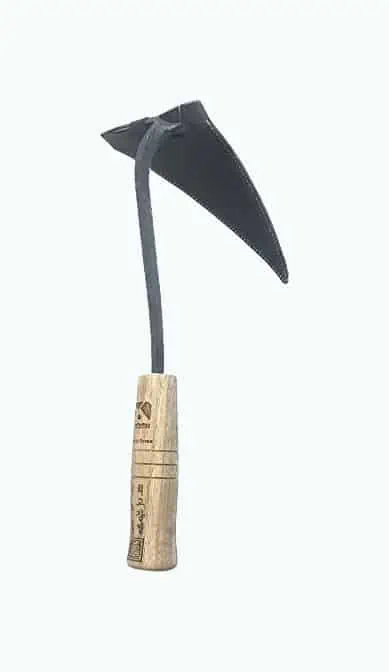
Weeds don’t stand a chance against this super powerful and versatile hand hoe. This uniquely shaped tool is great for weeding your garden. It will help you eliminate weeds that seem to spread at breakneck speed.
As well as weeding, you can use this for digging, plowing trenches, planting, and basically any other garden work. If you are looking for an all-in-one tool to test in every area of your yard, look no further.
The blade, made of hand-forged steel, is super sharp and pointed. It’s designed to make gardening in challenging spots easy.
Although you will have to get onto the ground to use it — since it’s a hand hoe — it’s been designed with the gardener’s comfort in mind. The handle is ergonomically shaped, making it comfortable to hold. It’s sturdy and has a strong grip, allowing you to work longer without slips or fatigue.
Pros
- Handmade by a product master in Korea.
- Suitable for most garden jobs.
- Uniquely shaped, strong, sharp blade.
- Ergonomic handle for a comfortable grip.
- Lightweight (9.1 ounces) and compact.
Cons
- Can’t be sharpened easily.
- 4.53-inch handle is too short for some.
Product Specs
| Purpose | Almost any garden job |
| Weight | 9.1 ounces |
| Handle Length | 4.53 inches |
| Handle Material | Polished wood |
| Blade Shape and Material | Unique shape; hand-forged steel |
Our Ratings
User Experience
Rogue Hoe Prohoe Garden Hoe
Best Heavy Duty Garden Hoe
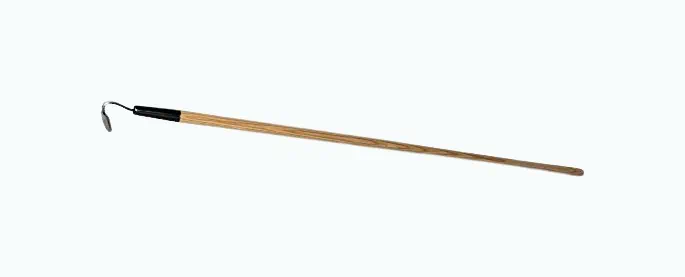
Looking for a reliable garden hoe for those demanding gardening tasks? Look no further than this heavy-duty option, built to withstand even the most demanding jobs. Made with high-quality materials, this hoe is designed to last a lifetime and comes with a guarantee that covers repairs or replacements in case of any issues, no questions asked.
The garden hoe has a wide-tempered steelhead designed to easily cut open new ground or cultivate existing ground. It has three super sharp edges, allowing you to work for a long time with less effort.
Cut into the ground from any angle due to the unique shape of the blade. It also fits between plants nicely so that you can dig new trenches.
I also think you’ll love the balanced weight. At two pounds, it’s a bit heavier than other hoes. However, it doesn’t make much of a difference since the weight is well-balanced, making it an easy-to-use option for most gardeners.
Pros
- Made from recycled disc blades.
- Versatile product with multiple uses.
- 60-inch long handle with great balance.
- Unique sharp blade for easy cutting and digging.
- Balanced weight, making it a great choice for all gardeners.
- Lifetime guarantee.
Cons
- Some customers found the blade’s edge retention to be poor.
- Expensive price point.
- The blade is quite narrow.
Product Specs
| Purpose | Digging and cultivating |
| Weight | 2 pounds |
| Handle Length | 60 inches |
| Handle Material | Ash wood |
| Blade Shape and Material | Triple edge; tempered steel |
Our Ratings
Personal Perspective
DeWit Right Hand Dutch Hand Hoe
Best Dutch Hoe
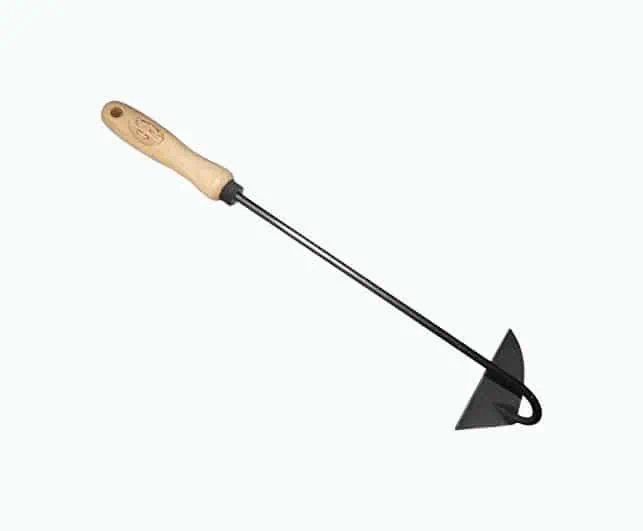
This Dutch hoe is shaped in the classic Dutch way, but it goes a step further. It’s authentically true to Dutch quality, ensuring that the tool is strong, lightweight, and effective. A lifetime guarantee backs this, so you can ensure this tool will meet your expectations for years to come.
This comes with a crescent-shaped blade, which lends itself to strong gardening work, ultimate control for the user, and a nice balance.
What can this blade do? Its primary purpose is weeding, but the unique shape means you could put it to the test in other areas.
The best thing about this is that it weeds so well that you can finally eliminate the use of herbicides in your yard. This will make your pets, plants, wildlife, and flowers much happier.
When the blade wears down, you can easily sharpen it with a whetstone. So you can restore it to its original sharpness without any hassle.
Something To Note
This is a right-handed tool, suitable for right-handed users only. If you’re left-handed, make sure to choose the left-handed option before checking out.
Pros
- Backed by a lifetime guarantee.
- Perfect for weeding without using pesticides.
- Easy to sharpen with a whetstone.
- Both right- and left-handed options available.
- Unique shape is easier to control and balance.
- Super lightweight at 9.8 ounces.
Cons
- One of the more expensive options on the market.
- The 18-inch handle is a bit of an awkward length.
Product Specs
| Purpose | Weeding |
| Weight | 9.8 ounces |
| Handle Length | 18 inches |
| Handle Material | Ash hardwood |
| Blade Shape and Material | Crescent shape; hand-forged boron |
Our Ratings
Community Feedback
Ashman Garden Hoe
Best Versatile Hoe
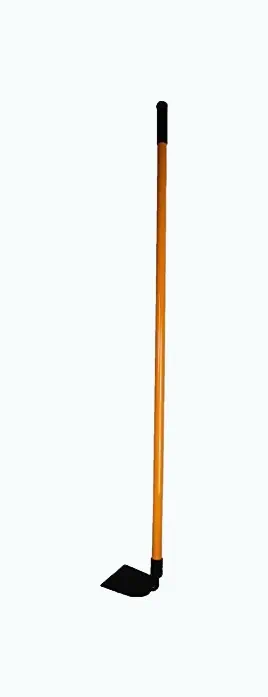
Dig, loosen soil, and weed with this Ashman garden hoe. It has been built with multiple uses in mind so that you can use this one tool for a range of jobs. In fact, you can even use it to aerate the soil, which is a huge bonus for keen gardeners.
The garden hoe is a strong and durable construction suitable for both light- and heavy-duty use in the garden. The blade and handle are secured together, so there will be no breaking and bending while you dig deep roots and work with tough soil.
The blade edges are extremely sharp, making it easy to cut through stubborn soil. Say goodbye to the frustration that comes with weaker garden hoes and tough soil.
The prongs on this hoe are made with durable carbon steel, which is both handy for use and good for storage. The carbon steel is rust-proof and will remain strong for many years to come.
What’s really great is that it’s also chip-proof, so even if you have rocks or fertilizer in your soil, the prongs won’t chip or break as you work with the garden hoe.
Pros
- Fair price point for such a high-quality hoe.
- You can use the blade at all angles.
- Durable and chip-proof carbon steel blade.
- Versatile product with multiple uses.
- Solid and quality construction.
- Rubber grip handle for comfortable use.
Cons
- Some customers found the edge to be a bit blunt.
Product Specs
| Purpose | Digging, loosening soil, aerating, and weeding |
| Weight | 2.44 pounds |
| Handle Length | 55 inches |
| Handle Material | Fiberglass |
| Blade Shape and Material | L-shape; carbon steel |
Our Ratings
First-Hand Impression
DeWit Comby 3-Tine Hoe
Best Heart-Shaped Garden Hoe
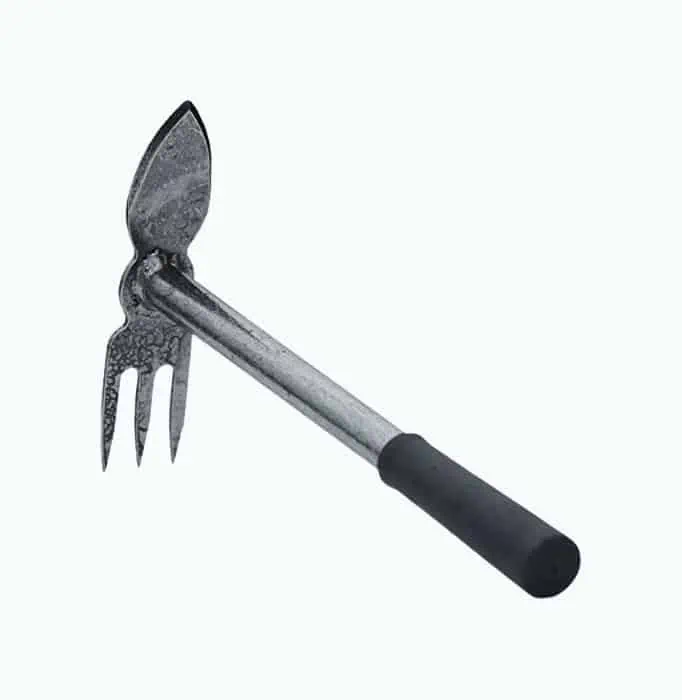
Heart-shaped garden hoes are both practical and sweet-looking. If you’re in the market for one, I’ve found this handy DeWit option.
It is double-ended, so on one side, you’ll find the heart-shaped blade, which is best for digging. On the other side is the 3-tine cultivator, which is suitable for cultivating and loosening tough soil.
Overall, this is a versatile tool all-in-one. While it is pretty pricey, you’re saving money since you’re buying one tool instead of two.
The blades are made from hardened boron steel, which is sturdy, durable, and strong enough to loosen even the toughest soil.
The handle is also made of steel, which some customers see as a welcome change from wood, mostly because it is very durable and backed by a lifetime guarantee. To protect the gardener’s comfort and fatigue, it’s wrapped with an ergonomic soft grip that allows you to dig and rake for ages without tiring.
Pros
- Double-ended with a heart-shaped and cultivator end.
- Backed by a lifetime guarantee.
- Full steel design for durability.
- Soft ergonomic grip on the handle.
- Great for digging and loosening tough soil.
Cons
- A bit pricey, but ultimately, you save money since it’s 2-in-1.
Product Specs
| Purpose | Weeding, digging, and cultivating |
| Weight | 1.1 pounds |
| Handle Length | Roughly 13 inches |
| Handle Material | Tubular steel |
| Blade Shape and Material | Heart-shaped and tine; hardened boron steel |
Our Ratings
User Experience
Nisaku Long Handle Draw Hoe
Best Draw Hoe
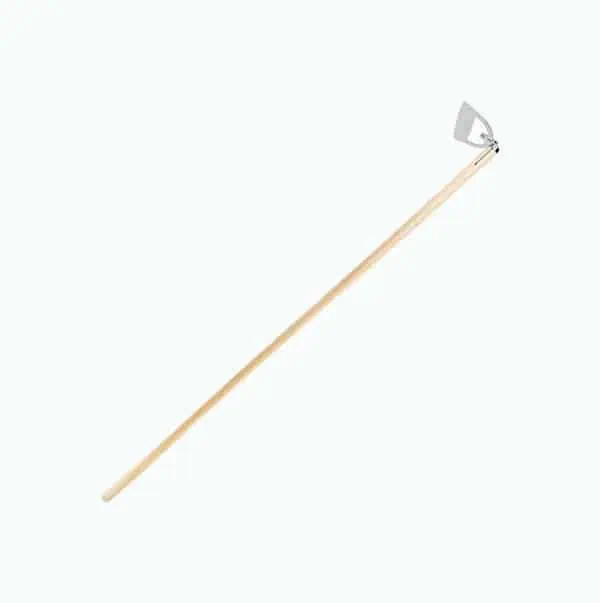
This draw hoe from Nisaku is a great choice, especially if you want a versatile option.
You can use it in many ways throughout your yard. It’s suitable for clearing weeds, crops, and plant residue, harvesting vegetables, and shaping soil. So if those sound like the kind of tasks you need to tackle, consider this hoe.
The handle is made from polished wood and spans 42 inches long. This allows you to have good control while still being comfortable since the handle is easy to grip.
The blade itself is what aids the versatility but also the durability. It’s made from 1960 Tomita Japanese stainless steel, fashioned by real metal craftsmen. Also, it’s forged instead of welded, which means it’s more sturdy and heavy-duty.
Finally, it’s secured with steel rivets, so it won’t bend or break off as you work.
Pros
- Ultra-sharp blade for leveraging power.
- Suitable for heavy-duty garden work.
- Multiple uses such as harvesting, removing weeds, and shaping soil.
- High-quality materials for durability.
- Rust-resistant and easy-to-clean steel blade.
- Polished wooden handle with secure grip.
Cons
- 42 inches is a bit short — other hoes span up to 60.
- Blade is extremely sharp, so keep away from children and pets.
Product Specs
| Purpose | Harvesting, removing weeds, and shaping soil |
| Weight | 1.02 pounds |
| Handle Length | 42 inches |
| Handle Material | Polished wood |
| Blade Shape and Material | Draw shape; Japanese stainless steel |
Our Ratings
Personal Perspective
Wolf-Garten Dutch Hand Tool
Best Lightweight Option
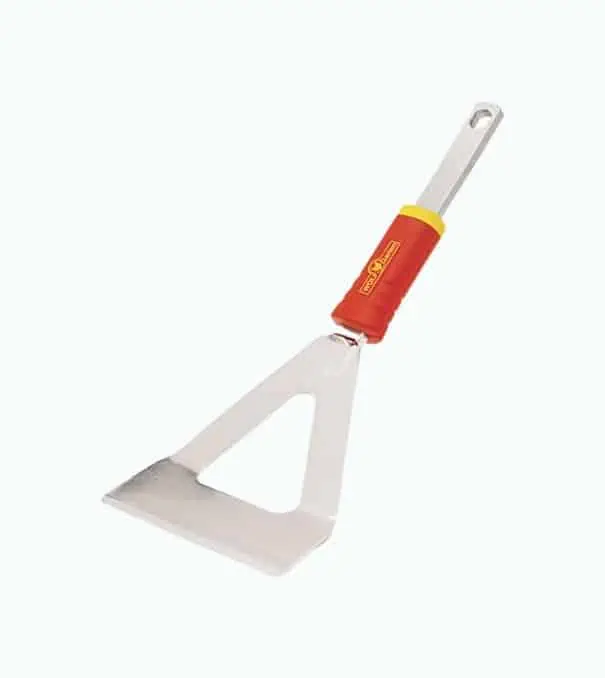
Don’t want your garden tools weighing you down? Then maybe you’ll like the sound of this 12-ounce tool from Wolf-Garten.
This Dutch hand tool is specifically used for evening out weed growth. So it’s not the most versatile tool on our list, but if evening weed growth is the specific task at hand, sometimes it’s better to get the exact tool for it. Just keep in mind that it’s best suited for light, sandy soil rather than hard, compact soil.
The weeding blade on this tool is hard and sharp, making it suitable for digging down into the soil and removing tough weeds. The sturdy and sharp edges make your job easier as it will cut through soil effectively.
As for the shape, it’s a Dutch blade, which means the blade is thin and easy to insert into soil. Push forward, and the blade will easily slip under the soil and slice the weeds. The middle cutout also helps to reduce drag, giving you a more effortless gardening experience.
Pros
- 12.3 ounces — super lightweight.
- Handy Dutch blade for effortless gardening.
- Sturdy, sharp blade edge.
- Great for evening out weeds in sandy soil.
Cons
- Quite expensive for a hand hoe.
- Not suitable for hard, compact soil.
Product Specs
| Purpose | Evening out weed growth |
| Weight | 12.3 ounces |
| Handle Length | Not specified |
| Handle Material | Metal and plastic |
| Blade Shape and Material | Dutch shape; metal |
Our Ratings
Community Feedback
| Product | Best | Purpose | Weight | Handle Length | Handle Material | Blade Shape and Material |
|---|---|---|---|---|---|---|
| HomeTheWay Korean Hand Tool | For Weeding | Almost any garden job | 9.1 oz | 4.53″ | Polished wood | Unique shape; hand-forged steel |
| Rogue Hoe Prohoe Garden Hoe | Heavy Duty Garden Hoe | Digging & cultivating | 2 lbs | 60″ | Ashwood | Triple edge; tempered steel |
| DeWit Right Hand Dutch Hand Hoe | Dutch Hoe | Weeding | 9.8 oz | 18″ | Ash hardwood | Crescent shape; hand-forged boron |
| Ashman Garden Hoe | Versatile Hoe | Digging, loosening soil, aerating, & weeding | 2.44 lbs | 55″ | Fiberglass | L-shape; carbon steel |
| DeWit Comby 3-Tine Hoe | Heart-Shaped Garden Hoe | Weeding, digging, & cultivating | 1.1 lbs | 13″ | Tubular steel | Heart-shaped; boron steel |
| Nisaku Long Handle Draw Hoe | Draw Hoe | Harvesting, removing weeds, & shaping soil | 1.02 lbs | 42″ | Polished wood | Draw shape; Japanese stainless steel |
| Wolf-Garten Dutch Hand Tool | Lightweight Option | Evening out weed growth | 12.3 oz | N/A | Metal & plastic | Dutch shape; metal |
Types of Garden Hoes
Garden hoes generally all do the same thing, but it’s important to distinguish between the three main types.
Draw
A draw hoe is the most common kind of garden hoe. It has a 45-degree angled blade at the end of the handle and earns its name from the fact that you need to chop and draw the hoe inward.
This is mainly for loosening soil and digging weeds. While digging up hard and deep roots can take a while, it’s a classic tool that most gardeners own.
Pros
- Readily available across the market.
- A must-have for gardeners.
- Great for loosening soil and digging weeds.
- Works on hard and soft soil.
- Usually, they are lightweight.
Cons
- Time-consuming if digging hard, deep roots.
Scuffle
Scuffle hoes, often known as eye hoes, have a triangular-shaped hoop-type blade. These hoes can loosen the top inch or so of a soil’s surface. A scuffle hoe is suitable for heavy-duty digging, root cutting, opening up plant beds, and removing weed growth. Within this range, you’ll also find Dutch hoes and hoop hoes.
Pros
- Suitable for the soil’s surface.
- Heavy-duty design.
- Versatile uses, including digging, root cutting, and more.
- Grea for removing weeds.
Cons
- Not as many options available on the market.
- Can be pricey.
Hand Hoe
A hand hoe typically refers to a short-handled hoe rather than a long hoe, which can span up to 60 inches. Hand hoes require you to get down to the soil’s surface, which may be tiring after a while but ultimately gives you more control over smaller areas. Within this range, you’ll also find a variety of blade shapes and styles.
Pros
- Very lightweight, usually under one pound.
- More affordable, sometimes half the price of long-handled hoes.
- Gives you more control over smaller areas.
- Lots of styles and shapes available.
Cons
- You may have to be on your knees unless you have raised plant beds.
How To Choose the Best Garden Hoes
Consider these important criteria before making your final purchase. It will ensure you find the hoe that is best for you.

Purpose
Firstly, the purpose of the hoe is fundamental. Many of them are used for various tasks, including but not limited to digging, loosening soil, and removing weeds. Check the hoe’s purpose to ensure you choose one that will tick all your boxes.

Weight
The weight is important, especially if heavy tools weigh you down. Handheld hoes are usually under one pound, so I recommend checking those out if you want something super lightweight.
As for long-handled hoes, their weight can range from one pound to about three pounds — so they’re still not too heavy. But you may still find these a bit too heavy if you want something super lightweight.

Handle
The handle is significant, as this is the part you’ll be holding and will determine how much control and comfort you have.
First, consider the length of the handle. Do you want a hand hoe or a long-handled hoe? Check the length and if it will be adjustable.
Next, consider the material. Most hoes are made with wooden handles, which are nice and lightweight but not as durable. If you want something super durable, hunt for something with a metal handle, like steel or aluminum. Plus, these are easier to clean.
You should also consider the ergonomics and comfort of the handle. Some have non-slip grips, which allow you more control and comfort. Others have an additional handle, which also allows for more control as well as better balance.

Blade
Onto the blade. Firstly, consider the blade’s material. Most are made from steel, but not all steel is the same.
There’s stainless steel, which is rust and corrosion-resistant. It’s a common steel choice, but you can’t sharpen it, and it’s not as strong. So only choose this for light-duty garden jobs.
Next is tempered steel, which is stronger and can be sharpened if necessary. However, it’s not corrosion-resistant, so if you live in a particularly rainy place, this can wear down quickly.
Lastly, welded hoe blades are budget-friendly. But it’s a weaker blade and can’t handle hard, compact soil. You may find heavy-duty hoes with welded blades, but always ensure these have heavy-gauge steel that will compensate for the welded blade’s natural weakness.
Besides material, you must also consider the shape. There are:
- Heart-shaped: Best for narrow areas and delicate plants, as you have more control with the fine tip.
- Looped: This allows you extra flexibility since you can push and pull with this hoe.
- Draw: This blade shape, often with a small cutout, is great for drawing soil toward you. If it has a small cutout, this can reduce the drag.
- Spike: This is for strong embedded roots, but it also works for weeding narrow areas.
- Dutch: These have a steep loop brace with a thin horizontal blade. With this, you push forward, and the blade will slip under the soil and cut weeds at the root.
Tips for Using and Maintaining Garden Hoes
Before you click “order,” here are some handy tips for using and caring for your garden hoe:
- Avoid hunching: Stay upright when using long-handled garden hoes. They’ve been designed, so you shouldn’t have to hunch.
- Keep your garden hoe sharp: Sharpen it before it gets too dull. Otherwise, it will be challenging to use.
- Choose the right one for your job: Make sure you choose the right hoe for the job. While there are many versatile hoes out there, they may not work for your specific job.
- Hold it like a broom: Hold the garden hoe like you’d hold a broom for best control.
- Clean regularly: Clean the garden hoe after each use to maintain its appearance and durability. This is especially important if they’ve been exposed to diseased plants.
- Wear gloves: Even if your garden hoe has an ergonomic grip, wear gloves for safety and better maneuverability.
- Dry tools: Hang your tools up in a dry area when storing them. This prevents rust and also keeps them from bumping into other items.
- Wipe handles: Wipe down wooden handles after every use. Occasionally, sand and oil the handles to keep them conditioned and smooth.
- Switch hands: Swap hands regularly if you’re able. This will prevent fatigue.
- Watch the weather: It’s best to deal with weeds when the soil is dry, making pulling out the entire root much easier. This also ensures that most of the root is gone, which limits the chance of the weeds re-germinating. As for perennial weeds, it’s easier to deal with them when the soil is wet.
Garden Hoe FAQs

What Is the Best Type of Garden Hoe?
There is no absolute best type since it depends on the task. Draw hoes are the most common, but they come with their disadvantages.
They’re not the best for deep, hard roots. Always check what your garden tasks are and choose a garden hoe accordingly.

How Often Should You Hoe a Garden?
If using the hoe for weeding, experts suggest hoeing once or twice per week. This will prevent the roots from spreading and the weeds from taking over your garden.

What Is the Difference Between a Hoe and a Dutch Hoe?
A Dutch hoe is a type of hoe. Compared to a draw hoe, a Dutch hoe has a steel loop brace with a thin horizontal blade that slips under the soil and cuts the root of the weeds.

When Should I Hoe My Garden?
Choosing the right time to hoe your garden is important for the best results. Always hoe on dry days, when the soil is driest.

What Is a Warren Hoe?
A warren hoe is a type of hoe with a triangle-shaped blade set at 90 degrees to the handle. They are also known as Dutch hoes or ridging hoes.

What Is an Oscillating Hoe?
An oscillating hoe is sometimes called a stirrup hoe. It has a razor-sharp blade that travels under the soil to cut weeds at their stems.