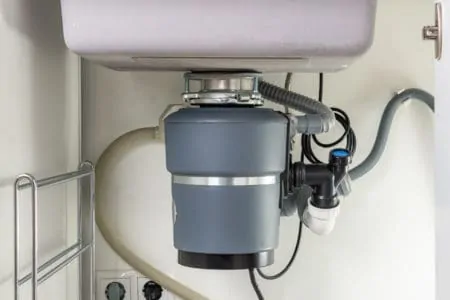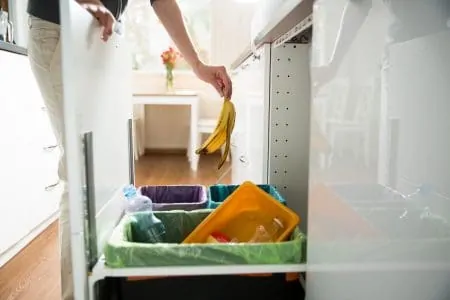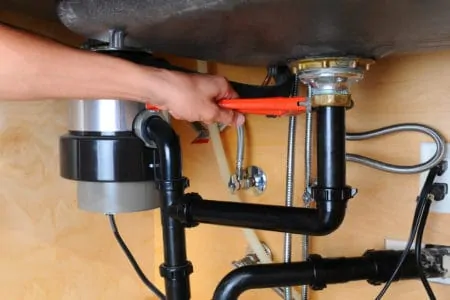
Is your garbage disposal humming? Is it a new sound and a cause for concern? Don’t worry — we can help.
If your garbage disposal is humming, it could be due to a problem deeper within. It’s crucial that you deal with the issue as soon as possible. Otherwise, it could worsen and eventually, stop your garbage disposal from working altogether.
You can troubleshoot many of these issues by yourself. However, when in doubt, always contact a plumber or an electrician, depending on the problem.
Key Takeaways
- Humming garbage disposals can be caused by jammed items, clogged grinders, overheating, or tripped circuit breakers.
- To fix humming, first identify the cause, then follow specific steps such as resetting the unit or unclogging the grinder.
- If the humming persists, contact a professional or consider replacing the unit if it’s old or damaged.
- Prevent future issues by using the garbage disposal correctly, avoiding overloading and putting the wrong items in it.
Causes of Garbage Disposal Humming
If your garbage disposal is humming, it needs to be repaired. But before you attempt to fix it, you must determine what’s causing the problem so you know exactly what next steps to take. Here are some of the common causes, but keep in mind that it may be something else.
- Jammed Items: Something is stuck in the unit or grind chamber.
- Clogged Grinder: Something is preventing the grinder from spinning or functioning properly.
- Overheating: It’s been overused and is too warm. This may cause humming, or it may cause the circuit breaker to trip.
- Tripped Circuit Breaker: This can happen due to overuse of kitchen appliances, an electrical fault, power cuts or various other reasons. This should be a quick fix.
- Wear and Tear: How old is your garbage disposal unit? It may be time for a new one.
- Needs a Reset: Garbage disposal units have a reset button which can fix various issues, such as humming.
If you find it’s none of these issues, and you can’t find the cause, contact a professional.
How to Fix Garbage Disposal Humming
Jammed Items
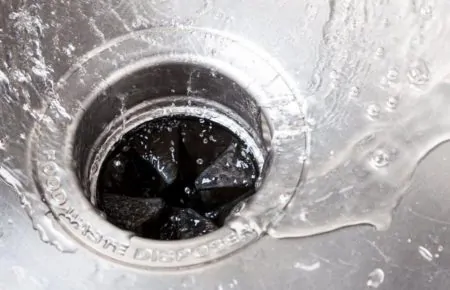
Grab a flashlight and look down your garbage disposal to check if anything is stuck. Make sure to keep your fingers out the way!
If you find there’s a jammed item, follow these steps:
- Disconnect the garbage disposal from the power source. You may have to turn it off via the circuit breaker.
- Use an Allen key to dislodge what’s stuck by inserting it into the hole underneath the unit and wiggling it around.
- Turn the power back on and switch on your garbage disposal. If the humming is gone, great! If not, switch off the unit again and move onto the next step.
- Take a long-handled item, such as a broomstick, and insert it in the garbage disposal entrance to unclog the jam, or you may use a garbage disposal cleaner.
- Once you’ve cleared the jam, use needle nose pliers to pull the item out.
- Reconnect the power, and run cold water into the sink.
- Turn on the garbage disposal and check it’s working.
Warning
Clogged Grinder
If you put too much food into your unit, or you don’t have one with a high horsepower, the grinder can easily clog. Follow these steps to fix this:
- Unplug the unit or turn off the power via the circuit breaker.
- Insert the Allen key into the hole at the bottom of the garbage disposal and gently move it back and forth to loosen the clog.
- If you feel a clog, keep moving the Allen key to loosen the clog completely.
- If there’s a clog near the top of the sink, use a long rod to break it free.
- Remove items from the garbage disposal unit with a pair of pliers, pulling them out from the top of the sink.
- Connect the garbage disposal back to power.
- Run cold water, and turn the garbage disposal back on.
Overheating
Garbage disposal units overheat when they’re overused or overfilled. The best way to prevent this is to follow the manufacturer’s advice on what kind of food to put in it, and how much.
To fix an overheated garbage disposal, follow these steps:
- Turn off the garbage disposal and allow the unit to cool down.
- After a few minutes, turn it back on. If it’s back to normal, proceed with using it but be careful.
- If it doesn’t work, or is still humming, turn it off and press the reset button which is usually at the bottom of the unit.
- Turn it on again. If it doesn’t come back on, check at the circuit breaker to see if the trip has switched. If it has, move it to the neutral mark, then to the “on” position.
- Press the reset button and run some cold water.
- Turn the garbage disposal on.
If it’s not working, or is still humming, contact an electrician.
Tripped Circuit Breaker
As mentioned, overheating — or other electrical faults — can cause the circuit breaker to trip. This can also happen when you use other electrical kitchen appliances, and the system is overwhelmed.
To fix this, check the circuit breaker. There should be different labels for appliances, or for the kitchen as a whole. If the disposal switch is at the neutral spot, turn it off, then on. It should be working again.
If not, contact an electrician.
Wear and Tear
Unfortunately, your garbage disposal may be humming due to general wear and tear. Garbage disposal units do last a long time, but they aren’t designed to last forever. Check if yours is still under warranty, and if not, there may be no way to fix the humming. It might just be time for a new garbage disposal unit.
Need a Reset
There is some good news though! Maybe it just needs a reset. This is probably the case if there’s humming but no jams, electrical issues, overheating or it’s a pretty new unit. Simply find the reset button, press it, then start the disposal again.
If you’re still having trouble, we recommend contacting the manufacturer, especially if the unit isn’t old. They may have some advice, or they could send somebody out to inspect the unit, free of charge, if it’s still under warranty.
FAQs

Garbage Disposal Humming But Flywheel Not Stuck
If the unit is humming but the flywheel isn’t stuck, try resetting the unit. Follow our tips under “Need a Reset” to troubleshoot this issue. The other problem may be overheating or general wear and tear.

Garbage Disposal Hums But Spins Freely
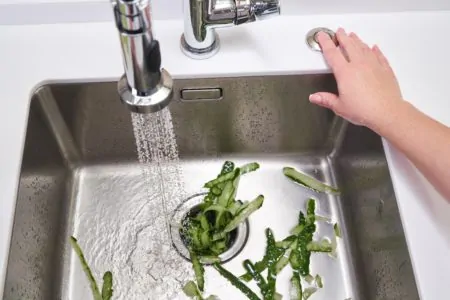
Your garbage disposal unit may be spinning freely, and grinding food, but still humming. This is most likely because you’re forcing food down it, putting the wrong food in it, or overusing it. We recommend checking if the unit is overheating, and following our advice on how to fix that issue.
In general, always follow the manufacturer’s advice. This will tell you exactly how to use the unit and what foods you should never put down your garbage disposal.
For example, this includes hot grease, oil, coffee grounds, seeds, stringy fruit, and vegetables, shells (from eggs, clams and such foods) and much more (1). Always check the manufacturer’s advice as this may change depending on the brand.

Garbage Disposal Humming and Smoking
When you hear humming, it’s very important to turn the unit off and deal with the issue. If you don’t, and it’s an electrical issue, the unit could start smoking. This is evidence that the motor or the circuit is burned out.
This can be caused by jams, clogged grinders, overheating and general electrical problems. Follow these steps to troubleshoot the issue:
- Turn off the unit and shut off its power source.
- Check the opening to see if there’s anything visibly stuck. If so, use pliers to remove it.
- Using a broom handle, insert it into the opening and try and rotate the grinding plates if possible to check that they’re no longer clogged.
- If this isn’t possible, insert an Allen key into the hole at the bottom and turn it that way.
- Once you’re sure there are no clogs, run cold water and turn the unit back on.
- If it works as normal, and the burning and smoking is gone, proceed using your garbage disposal, but be cautious.
- However, if it’s still humming or smoking, contact an electrician. Keep in mind that the only option here may be to get a new garbage disposal.
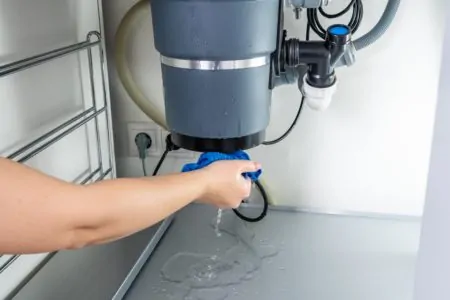
Garbage Disposal Humming and Leaking
A humming and leaking garbage disposal is usually the result of any of these three problems: a leaky sink flange, a broken seal inside the unit, or leaky drain lines.
If it’s the sink flange, you’ll need to remove the old seal, clean off the plumber’s putty and reapply a new sink flange. If your flange has been tightened with screws, get a new one and tighten it with screws as well.

How Long Do Garbage Disposals Last?
A garbage disposal should last for about 10 years, provided it is used as intended, and maintained according to the manufacturer’s instructions.

Can I Run a Dishwasher If My Garbage Disposal is Clogged?
You can run your dishwasher if your garbage disposal is clogged, provided that you wash away the larger food particles before placing the dishes in the dishwasher.
Stop the Hum
Humming garbage disposals can be quite alarming, but there’s usually a pretty easy fix. Whether that’s checking the circuit breaker, unclogging the unit, or tightening some of the connections — hopefully, your unit is back to its normal self.
However, if the unit continues humming, or possibly starts to smoke, it may be time for a new garbage disposal unit. We know this can be an expensive fix, but it’s always better to be safe.
Lastly, do what you can to prevent all of these issues by using your garbage disposal correctly. Never feed it the wrong foods, never overload it and never force objects into the unit.