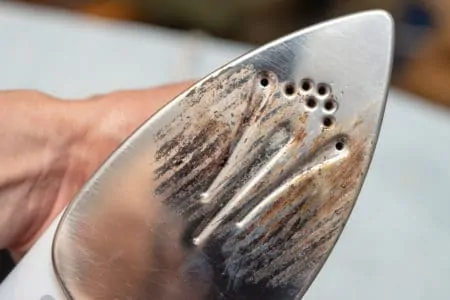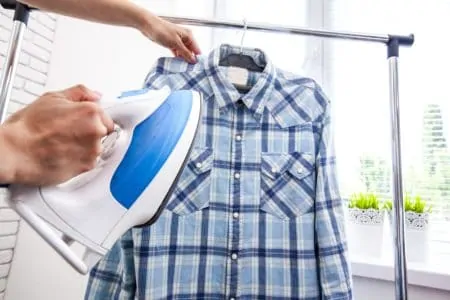
Ironing can be a hassle for many reasons. But one thing that ironers universally despise is the cord getting in the way or restricting where you do your ironing. Corded irons are also tough on left-handed users since the design is usually made with right-handed folks in mind.
If you want to make your ironing routine a little easier, you might want to consider a cordless iron. To help you find the best cordless iron for you, we put together a list of what products are most loved by customers and experts.
After looking at each product’s power, heating time, ironing time, and size — we’re confident you’ll find something on our list.
- Powerful vertical ironing
- Easy to refill
- Stay-clean vents with minimal clogging

- Compact design easy to store
- Non-stick soleplate
- Safety features included
- Nickel-coated stainless steel soleplate
- Double-sided precision tip
- Vertical steaming
- Stainless steel soleplaet for smooth ironing
- Easy to use and adjust temperature
- Vertical steaming compatible
- Heats up in 10 seconds
- Spray & mist steam buttons
- Large 12-ounce water tank
Review Methodology: At Oh So Spotless, we provide a thorough analysis and evaluation of the best cordless irons on the market from a user’s perspective. Our experienced team of professionals conducts hands-on research and assessments, comparing key decision-making factors such as performance, design, and ease of use. We measure, rank, and review products based on criteria like heat settings, battery life, safety features, and durability, sharing our findings and first-hand experiences. Our data-driven approach and expertise help you determine what sets a product apart from its competitors and choose the best cordless iron for your needs. Rest assured that our content is based on facts, evidence, and genuine user experience, ensuring you can trust our recommendations.
The Best Cordless Irons of 2024
It’s time for our product reviews on the best cordless irons on the market. We’ve spent hours gathering these recommendations based on real customer reviews and our own insight. We ensured that all our recommendations are powerful and practical enough to blast wrinkles out of sight.
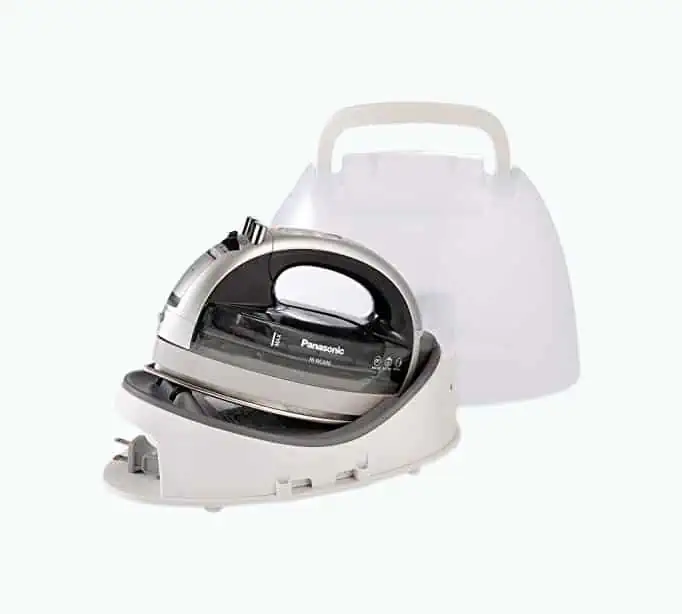
Panasonic 360º Freestyle Cordless Iron
Best Versatile Cordless Iron
Freestyle ironing? It’s officially here!
This cordless iron provides the most freedom, flexibility, and versatility. The soleplate is uniquely designed with a symmetrical shape, including a pointed tip at both ends. This allows you to rotate it 360 degrees in any direction you choose.
We also love how quickly this heats and how hot it gets (up to 392°F). This allows you to bust out stubborn wrinkles quicker than ever before.
What We Like
Powerful Vertical Ironing
If powerful steam is what you’re after, you came to the right place. This has incredible vertical and jet steam power. The vertical steam allows you to remove wrinkles on hanging items such as clothes, curtains, and more.
Jet Steam Burst Feature
The jet steam power allows you to get a big burst of steam to tackle more stubborn wrinkles, whether on clothes, bedsheets, or elsewhere. You can also use this feature to clean out the soleplate!
Easy to Refill
Many irons are hard to refill. You must squeeze it under the tap and get the water into the small opening.
But with this iron, you can remove the water tank from the iron for easy refilling. When you’re done, snap the tank back into place.
Stay-Clean Vents and Minimal Clogging
While the vents are easy to clean with the jet steam button, there’s also an anti-calcium system. This automatically minimizes clogged vents by reducing build-up in the chamber and vents of the iron.
What We Don't Like
Only Three Heat Settings
Some people prefer more customizable heat setting options. Unfortunately, this one only comes with three: low, medium, and high.
While this is often enough for most people, if you’re looking for something more versatile, you may want to consider something else.
Heating and Ironing Time Not Specified
It can be hard to commit to an iron when the heating and ironing time isn’t specified. It does say it’s quick to heat, but we don’t know much about how heat retentive this iron is.
Product Specs
| Heating Time | Not specified |
| Ironing Time | Not specified |
| Power | 1500 watts |
| Overall Size | 11.5 x 6.75 x 8.25 inches |
| Weight | 4.97 pounds |
Our Ratings
User Experience
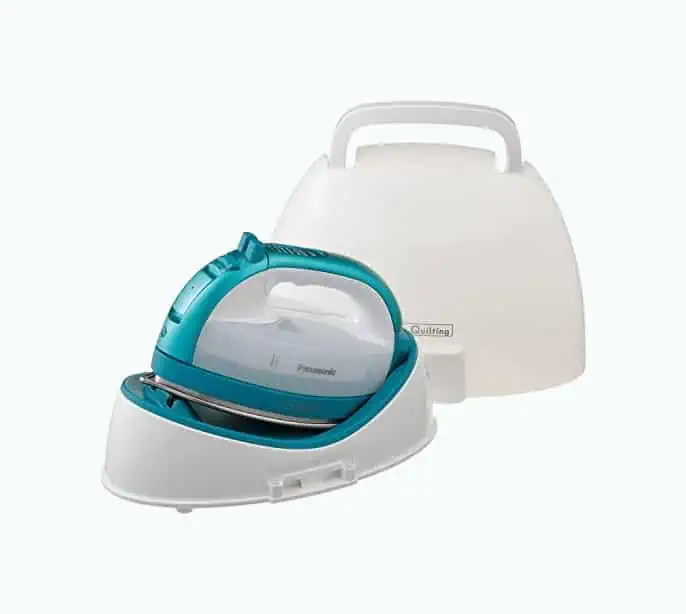
Steamfast SF-760 Portable Cordless Steam Iron
Best Budget Cordless Iron
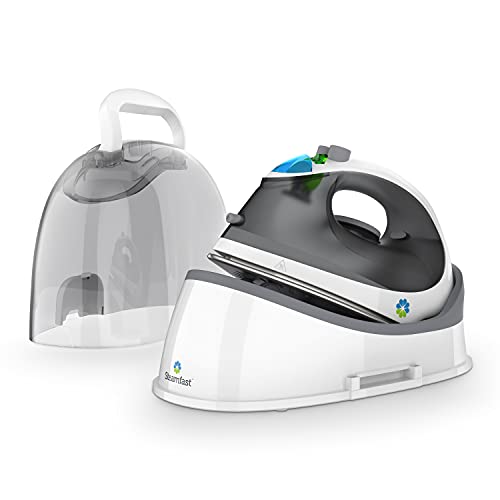
For cordless iron shoppers on a budget, check out the Steamfast SF-760. This is a popular choice of cordless iron — and it’s a good one, too!
The base is super light and compact. It attaches to the bottom of the iron. What’s more is that it heats up as fast as seven seconds!
This is a powerful iron with a leak-free design. You’ll be able to zap out wrinkles quickly and effectively.
What We Like
Compact Design Stores Easily
We love that the Steamfast SF-760 rocks a compact design. You don’t need much space if you’re in the market for a cordless iron because this one is modest in size. Plus, it comes with a carrying case for an on the go ironing job.
Durable Non-Stick Soleplate
We can’t emphasize enough how much we love nonstick as a soleplate material! It’s durable, glides easily, and can sustain super-high temperatures with its 25 steam outlets.
Safety Features Included
This cordless iron comes with the bonus auto-off functionality! When the iron is left on idle in the base after eight minutes, the system automatically shuts the system off for a seamless and safety ironing.
What We Don't Like
Short Ironing Time
Compared to other cordless irons, the Steamfast has a shorter ironing time. It only retains heat for about 30 seconds before needing to go back to its charging base. However, it takes less than 7 seconds to reheat between use.
Doesn’t Get Hot Enough
Even though it reheats quickly, it’s not hot enough for some fabrics or quilting. While it’s a powerful iron at 1200 watts, it’s maybe not as impressive as some other options.
Product Specs
| Heating Time | About 7 seconds |
| Ironing Time | 30 seconds |
| Power | 1200 watts |
| Overall Size | 7.4 x 6.0 x 11.2 inches |
| Weight | 3.0 pounds |
Our Ratings
Panasonic Compact Cordless Steam Iron
Best Lightweight Cordless Iron
Cordless irons can be pretty heavy. Some users love that because they have to put less pressure to get out wrinkles and creases. However, it’s nice to have a lightweight option — like the Panasonic Compact cordless steam iron.
This iron only weighs one pound, making it super easy to use. It’s a high-power iron, coming in at 1500 watts. That’s pretty amazing for such a compact iron!
You can heat this in a short 10 seconds for 30 to 60 seconds of use. This is the perfect amount of time to iron one side of a garment, then rearrange it while the iron recharges.
What We Like
Nickel Coated Stainless Steel Soleplate
The Panasonic Compact cordless iron comes with a nickel-coated stainless steel soleplate. It heats quickly (only 10 seconds) and glides smoothly across garments to erase wrinkles.
Double-Sided Precision Tip
This curved soleplate has a precision tip at both ends. We love it for ironing around complex items, such as buttons, collars, cufflinks and more. You can move in any direction you please.
Vertical Steaming for Various Garments
You can steam vertically or horizontally with this cordless iron. If you have hanging garments or furniture you’d like to steam, it’s easy with this iron. Plus, with 32 steam vents over the entire soleplate, you can enjoy powerful and even steam without any drips.
User-Friendly and Basic Design
This iron is pretty basic. There are only three temperature settings: high, medium, and low. This is a good pick if you’re looking for something simple for small amounts of laundry across various fabrics.
What We Don't Like
Not Hot Enough
You probably can’t sing “It’s getting hot in here” when using this iron. Customers find that it doesn’t get quite hot enough, especially for heavy and thick fabrics.
Limited Options
The basic interface of this iron is both a pro and a con! If you are on the hunt for lots of temperature settings, you’ll be pretty disappointed with this iron. It only has three basic settings.
Product Specs
| Heating Time | 10 seconds |
| Ironing Time | 30-60 seconds |
| Power | 1500 watts |
| Overall Size | 7.13 x 11.5 x 8.95 inches |
| Weight | 1 pound |
Our Ratings
Community Feedback
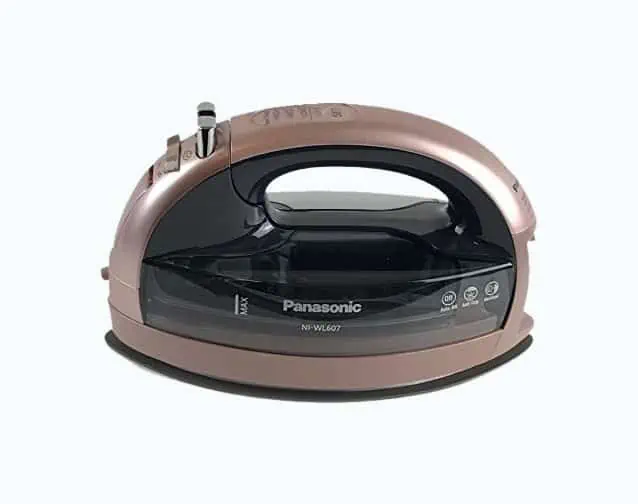
Panasonic NI-WL600 Cordless Iron
Best for Quilting
Can you use a cordless iron for quilting? Absolutely! The Panasonic NI-WL600 Cordless Iron is a great choice.
If you’re a quilter, you will love the convenience of this iron. It has a double-pointed soleplate, so you can press fabric from any direction.
It’s tailor-made for quilting and sewing. Plus, you can easily bring this with you to classes or retreats.
Also, the anti-drip function prevents water leaking so that you can protect your quilts! Enjoy 360° ironing with this cordless iron.
What We Like
Stainless Steel Soleplate for Smooth Ironing
The Panasonic NI-WL600 is a dreamy, breezy, easy iron to use. The stainless steel soleplate can be used on any fabric.
It’s made with a contoured and elliptical design that glides seamlessly over fabrics. No tugging, no pulling, no wrinkling. The pointed tip makes navigating buttons and other minute details easy.
Easy to Use and Adjust Temperature
Switching to a cordless iron shouldn’t be a huge learning curve, and with this iron, it’s not. Set the temperature, let it heat up in a minute or two, then iron. While you readjust your garment, the iron will heat up on its base.
You can set the temperature with the touch of a button. The handy guide on the base tells you which temperature setting to use depending on your fabric!
Vertical Steaming Compatible
The Panasonic cordless iron works as a 2-in-1 device. You can use this as an iron or a clothes steamer. Just charge it up and use it vertically to steam hanging clothes, upholstery, or furniture.
360-Degree Ironing
The iron is completely symmetrical so that you can iron in any direction. This gives you total freedom over your ironing experience — beat wrinkles out of any garment.
What We Don't Like
It Begins to Leak
You can’t expect this cordless iron to last that long. Because unfortunately, a common customer complaint is that the water tank starts leaking after a year or so. It is subject to wear and tear because the quality of the tank is not that great.
Only Three Temperature Settings
While the temperature settings are easy to navigate, the low temperature is almost a bit too low. The highest temperature also might not be hot enough for some folk. Keep this in mind, especially if you iron a lot of cotton and linen, which require high temps.
Product Specs
| Heating Time | 1-2 minutes |
| Ironing Time | Up to 5 minutes |
| Power | 1500 watts |
| Overall Size | 11.2 x 6.9 x 8.3 inches |
| Weight | 4.4 pounds |
Our Ratings
First-Hand Impression
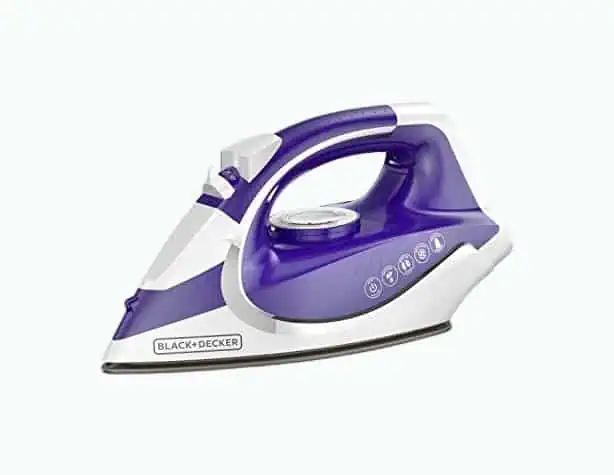
Black+Decker Light ‘N Go Cordless Iron
Best Base
For us, the base of a cordless iron can be as important as the iron itself. Each base is unique — and the Black + Decker Light ‘N Go cordless iron base is pretty magic!
It comes with an illuminated charging base. Each light means something.
- Red = heating up.
- Green = ready to use.
Flashing red is a recharge warning. Flashing red and three beeps means a recharge is needed; slowly pulsing red means auto shut-off is activated.
If you need extra guidance with your cordless iron, check out this option!
What We Like
Heats up In 10 Seconds
Black + Decker irons heat up super fast. It only takes 10 seconds to recharge. It’s designed to recharge in the amount of time it takes to readjust a garment.
Just remember that it only stays hot for 25 seconds. Still, the 10-second recharges make up for that — in our opinion!
Spray and Mist Steam Buttons
This iron can get out the toughest of wrinkles. The spray button allows you to dampen a fabric which can make getting out wrinkles a lot easier.
The steam button gives you a generous burst of steam whenever you need, too. You can even use the iron vertically by applying the steam burst button onto furniture, curtains, and upholstery.
Large 12-Ounce Water Tank
This iron comes with a large water tank. While you may have to return the iron to the base every 25 seconds, you won’t need to make frequent visits to the tap. The 12-ounce water tank allows for large loads of laundry without the inconvenience of refills.
Ceramic Non-Stick Soleplate
This iron is made with non-stick ceramic. This prevents the soleplate from snagging on your garments, ensuring even heat for smoothing out wrinkles.
What We Don't Like
It Doesn’t Retain Heat Long
With only 25 seconds of ironing time, this is definitely the biggest drawback to Black + Decker Light ‘N Go. It’s not enough time to iron a whole garment. You might even find it’s not enough time to even iron a sleeve.
Heaviest Option on Our List
This iron is one of the heavier irons on the market. It weighs 4.55 pounds which is quite bulky! This iron might make your ironing experience more annoying than it’s worth.
Product Specs
| Heating Time | 10 seconds |
| Ironing Time | 25 seconds |
| Power | 1500 watts |
| Overall Size | 6.2 x 11.6 x 5 inches |
| Weight | 4.55 pounds |
Our Ratings
User Experience
| Product | Best | Heating Time | Ironing Time | Power | Overall Size | Weight |
|---|---|---|---|---|---|---|
| Panasonic 360º Freestyle | Versatile Cordless Iron | Not specified | Not specified | 1500 W | 11.5 x 8.75 x 7.13″ | 4.97 lbs |
| Steamfast SF-760 | Budget Cordless Iron | 7 sec | 30 sec | 1200 W | 7.4 x 6.0 x 11.2″ | 3.0 lbs |
| Panasonic Compact Cordless Steam Iron | Lightweight Cordless Iron | 10 sec | 30-60 sec | 1500 W | 7.13 x 11.5 x 8.95 inches | 1 lb |
| Panasonic NI-WL600 Cordless Iron | For Quilting | 1-2 min | 5 min | 1500 W | 11.2 x 6.9 x 8.3″ | 4.4 lbs |
| Black+Decker Light ‘N Go | Base | 10 sec | 25 sec | 1500 W | 6.2 x 11.6 x 5″ | 4.55 lbs |
How Do Cordless Irons Work?
Cordless irons function quite differently from regular corded irons. They look pretty similar in design: they have a heated plate, handle, temperature dial, water tank, and steam holes. But…
Cordless irons sit on a base that’s plugged into a nearby outlet. When your iron is on the base, it heats up to the selected temperature.
Once you take it off the heating base, it will stay hot for a couple of minutes before cooling down again. You will need to return it to the base for its next charge.
Please Note
Are Cordless Irons Any Good?
It depends on what you want from your iron. Cordless irons are great for left-handed folk, ironing in hard-to-reach areas, or having extra freedom while ironing.
However, these irons require some extra patience as they need reheating every few minutes. Keep in mind, however, that reheating these irons doesn’t take long at all. Some irons can heat up in only 10 seconds!
Overall, cordless irons don’t trump corded irons — yet. But they are a cool invention.
Pros
- Good for left-handed and right-handed people.
- The cord doesn’t get in the way of your ironing.
- Similar watt power to regular irons.
- You have more freedom of movement when ironing.
Cons
- They don’t stay hot very long.
- Need to be recharged often.
- You need space nearby for your charging base.
- Limited choice — not as many cordless irons on the market yet.
Are Cordless Irons Less Powerful Than Corded Ones?
In terms of watt power, no. Cordless irons can definitely match the watt power of corded irons. The main issue with cordless irons is heat retention.
The cordless irons gradually lose heat as soon as they are removed from their charging base. After a minute or so, you might notice the iron is not hot enough to remove stubborn wrinkles.
So overall, yes, cordless irons are less powerful than corded ones. It will take more time to iron your clean clothes with a cordless iron. So make sure to weigh the pros and cons before choosing a cordless iron to prevent disappointment.
How to Choose the Best Cordless Iron
There are some elements to note when shopping for a cordless iron.
Heating Time
The shorter the heating time, the better. In fact, if the heating time is quick enough, you won’t notice the recharging time at all.
Many cordless iron users put the iron back to the base while repositioning their clothing. By the time they’re ready to iron the next part of a garment, the iron is hot again.
You’ll find cordless irons that take only 10 seconds to reheat, while others take around one minute.

Ironing Time
How long does the iron retain heat? The longer, the better. Some irons might allow you to get through a few garments before needing to recharge it.
You’ll find the ironing time roughly lasts anywhere between 25 seconds and five minutes. If you want something to stand a chance against your regular iron, choose one with a longer ironing time and a shorter recharge time.

Power
Look at the watts of an iron to see how powerful it is. This will determine the ability to get out stubborn wrinkles, which is a top priority in ironing.
All of our recommendations are at least 1400 watts. Anything under 1000, and you might find it doesn’t blast wrinkles out effectively enough for your standards.

Size
You’ll need to make space for your best cordless steam iron. It may come as a surprise that these irons can take up more space than a corded iron. This is because the bases are usually quite large.
So make sure to check out the size of the iron and the base. Determine whether your ironing board or a nearby countertop can accommodate the size.
Weight
The weight of the iron is important. Some people with hand or wrist issues may prefer a lightweight iron. Others like a heavier iron.
An iron with extra weight means you have to put less elbow grease into ironing their clothes! The weight of the iron is excellent at pressing out wrinkles and creases.
Our recommendations span from about two pounds to five. Depending on your preference, choose one that will suit your needs (and strength).
FAQs

How Can I Get an Iron Without Electricity?
You can use metal pots as irons. Heat them on the stove, spray the garments with water and press them flat with the base of the pan.

How Many Watts Should an Iron Be?
An iron should have between 1,000 and 2,000 watts, although some larger models can have as much as 3,000 watts. Travel options will be lower in wattage, between 300 and 1000 watts.

How Do You Use a Cordless Iron?
You use a cordless iron the same way as a cordless model. The only difference between the two is a cordless model has a battery life, while a corded model will run for as long as it is plugged in.
If you have a cordless model, plug in the base and charge the iron on it. After the dedicated amount of charging time, remove it from the base, iron your garment, and return it to the base to reheat.

What Is the Best Cordless Iron For Quilting?
In our opinion, the Panasonic NI-WL600 is the best cordless iron for quilting. It is easy to use, has the smoothest ironing action, and even offers vertical steaming.

How Do You Clean a Cordless Iron?
You clean a cordless iron the same way you clean a corded model. Here is our favorite method:
- Makeapaste: Mix a 1:1 solution of baking soda and distilled white vinegar to make a fizzing solution.
- Soak a towel: Soak a towel in the solution and lay it flat on an ironing board.
- Clean the iron: Turn the iron off and run it over the wet towel. This will remove stubborn stains from the soleplate.
- Fill the tank: Fill the tank 1/3 full with distilled white vinegar.
- Steam: Place the iron over a clean towel and let it steam for five minutes to clear out all the vents and steam holes.
- Refill the tank: Fill the tank with water and let it steam for another five minutes to remove all vinegar residue.