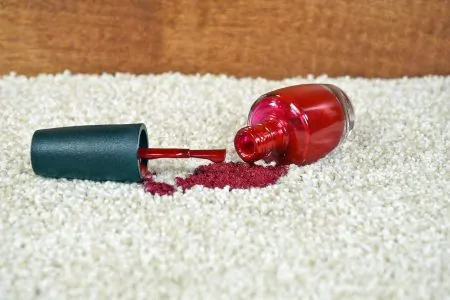
Nail polish spills are one of the most frustrating catastrophes that can happen to a carpet. The dense pigmentation and chemical compounds make it tough to beat — but not entirely impossible. Your floor may not be ruined forever.
You can quickly get that color disaster out of your life by knowing how to clean nail polish from your carpet.
We’ll show you the best methods for removing both fresh and dried nail polish. Let’s save that carpet.
Key Takeaways
- Act quickly to remove fresh nail polish spills using a spoon or dull knife, then blot with a towel or cloth.
- Avoid acetone and bleach, use alternatives like acetone-free nail polish remover, hydrogen peroxide, window cleaner, rubbing alcohol, or hair spray.
- For dried nail polish, scrape off the crust, test a cleaner in an inconspicuous area, and blot the stain with a cleaner-soaked cloth.
- After removing the nail polish, clean the area with soap and water, and dry the carpet thoroughly to prevent mold or mildew.
Nail polish on a carpet can be a challenge to remove. However, by acting fast, you should be able to get it off and restore your carpet.
Your method will depend on whether the stain is dried or freshly spilled. So start by inspecting the situation to ensure you’re taking the right approach.
Removing Fresh Nail Polish
If you’ve spilled nail polish, clean it up right away for the best results.
- Time: 30 minutes
- Difficulty: Intermediate
What You’ll Need
- Spoon or dull knife
- Napkins
- Old towels or rags
- Cleaning solution (such as acetone-free nail polish remover or hydrogen peroxide)
- Cotton swab
1. Remove the Excess Polish
Scoop up as much excess polish as possible using a spoon, dull knife, or any other scoopable tool. Keep a napkin close at hand to wipe off the polish from your tool in between scoops.
2. Absorb Fluids
You can remove most of the nail polish spill by blotting using an old towel, cloth, or rag. If you don’t have an old towel, you can use paper towels. However, we found fabric to be more efficient.
Fold the cloth or towel and use one spot at a time. Every time you blot the spill, change to a new area on the cloth. This will prevent the liquid from spreading and causing a mess. It will also prevent the nail polish from being pushed further into the carpet fibers.
Always Blot; Never Rub
Check the cloth after each blot to ensure the color is coming out. When the cloth or towel stops absorbing, the stain should be nearly gone.
3. Use a Cleaner
To successfully remove the last of the stain, finish off with a cleaner. Now, when we remove nail polish from our fingernails, we usually use acetone. However, this should be kept far away from colored carpet as it can cause damage and discoloration — the same goes for bleach.
Here are a few effective alternatives:
- Acetone-free nail polish remover
- Hydrogen peroxide for light carpets
- Window cleaner
- Rubbing alcohol
- Hair spray
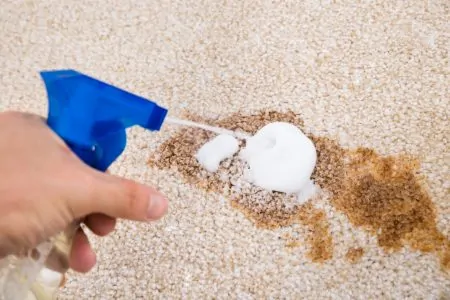
Before you begin to apply your choice of cleaner, we highly suggest you do a patch test. Choose an inconspicuous area, such as under furniture or the underside of the carpet.
An easy way to do a spot test is by using a cotton swab dipped in the cleaner. Dab it onto the chosen spot and wait a couple of minutes. Check for any signs of damage, such as discoloration. If you notice anything, try a different cleaner.
4. Remove the Stain
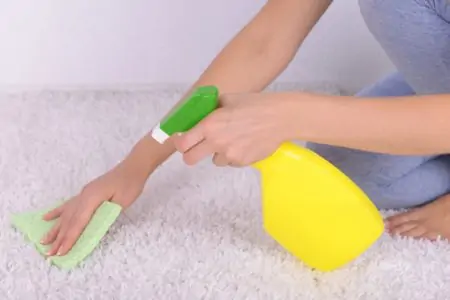
Dampen a towel or cloth with your chosen cleaner. If you use hair spray, you can apply it straight onto the spill in small amounts.
Fold the cloth and work in sections just as we did in step number two. After each blot, change the section and apply more of the cleaner. Keep going until the stain is completely gone.
Avoid Damage
Once the stain is gone, use a dry section from the cloth to absorb any remaining cleaner.
Removing Dried Nail Polish
Dried nail polish is harder to remove but not impossible.
- Time: 15-30 minutes
- Difficulty: Intermediate
What You’ll Need
- Spoon or dull knife
- Scissors (optional)
- Vaccum
- Chosen carpet cleaner (from the above list)
- Cloths or towels
- Old toothbrush
- Cotton swab
1. Scrape Visible Crust
Removing dried nail polish will be much easier if you get rid of the dried crust first. Use a spoon or dull knife to scrape the polish. Scrape in the direction of the fibers to avoid damage.
If you’re desperate, you can use scissors to cut or trim a layer of the nail polish out. However, be careful not to cut too wide or deep since this will be noticeable afterward.
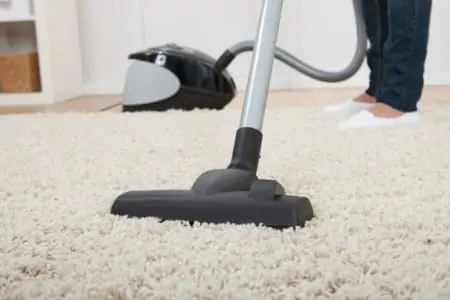
Use a vacuum to suck up all loose flecks that might be sticking to the carpet fibers. Vacuuming is the easiest way to get rid of the specks and gives you a cleaner area to work on. This, in turn, makes it easier to dissolve the rest.
2. Test a Cleaner
Before you get started, give your chosen cleaner a test in an inconspicuous area. Look for any signs of discoloration or other damage. Remember to avoid acetone and bleach as these may discolor the carpet.
We highly recommend using an acetone-free nail polish remover. These are designed to break down and dissolve the polish. Hydrogen peroxide can be highly effective on lighter carpets, but don’t use it on darker floors.
3. Blot Away
Use a clean cloth or towel and fold it into sections. Choose one spot and apply some cleaner to slightly wet the area.
Press the cloth into the stain and then loosen the nail polish by dabbing the area lightly. Change the section of the cloth and apply more of the cleaner. Repeat the process until the polish is gone. Avoid repeatedly using the same spot of the cloth as this could spread the stain.
Never rub the stain since this will cause it to seep into the fibers. If the stain is particularly stubborn, try using a small brush or toothbrush to gently work the cleaner into the spill. Avoid scrubbing too hard or outside of the spot to not spread the color.
Restoring the Carpet After Nail Polish
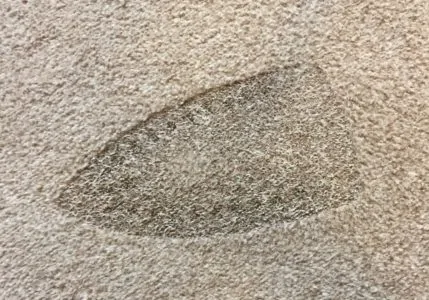
The following steps should preferably be done after removing a fresh or dried nail polish spill. It’s essential to clean the remaining stain or area to help the carpet restore its fibers. Leaving it could cause a flat spot that isn’t particularly pleasant to look at.
- Time: 20 minutes (plus drying time)
- Difficulty: Easy
What You’ll Need
- Paper towels, towel or cloth
- Bowl
- Water
- Carpet cleaner
- Dish soap or laundry soap
- Spoon
- Sponge
- Towels
- Fan
1. Absorb Excess Fluids
There might still be some cleaner or nail polish residue left on the carpet. Gently blot with paper towels to absorb the leftover polish. Again, this should be done using clean sections of either a paper towel, regular towel, or cloth. Keep going until it’s dry and clean.
2. Clean With Soap
Start by filling a small container or bowl with water. Add a couple of teaspoons of carpet cleaner, liquid dish detergent, or laundry soap. Mix it well in the water to fully dissolve the soap.
Use a clean sponge and wet it in soapy water — make sure you wring it out until it’s only damp. Then scrub the area lightly to remove any remaining residue. Keep wetting the sponge in the soapy water to effectively remove polish and its smell.
Once the residue and smell are gone, fill a bowl with clean water and use an unused sponge to rinse the area. If you have a two-sided sponge, try using the rough side to scrub off any leftover soap and polish. Rinse the sponge frequently in the clean water to avoid spreading the soap.
3. Dry the Carpet
When the nail polish is successfully removed, it’s time to dry the carpet. It’s essential to dry it entirely as excess liquids can soak into the carpet’s backing and cause mold or mildew to form (2).
Start patting the area with a clean towel or cloth to absorb excess liquid. We highly recommend setting up a fan to speed up the drying process. If you have a ceiling fan above the carpet, work it at full speed and leave it for an hour or until it’s dry.
Avoid using a hairdryer since the intense heat can damage the fibers and backing of the carpet. It might also take a while for the area to fully dry, so you’ll be stuck if you’re using a hairdryer.
FAQs

How Do You Remove Nail Polish Naturally?
You can remove nail polish naturally using several methods. Lemon juice is an excellent natural remedy, as is white vinegar. Simply apply it to the stain and dab it clean.

How Do You Remove Nail Polish From Carpet With Windex?
The best way to remove nail polish from carpet using Windex is to get as much paint up first before applying the detergent. Add a few drops of Windex to the stain and blot it with a paper towel. It is better to press the stain rather than rub it to minimize spreading.

Does Vinegar Remove Nail Polish Stains?
Vinegar does remove nail polish stains. You can apply it neat or water it down using warm water. Add baking soda for extra potency for tougher stains.

Does Magic Eraser Remove Nail Polish?
Magic Eraser does remove nail polish from a variety of surfaces, including walls, floors, appliances, clothes, and carpet. It’s best to test a small area first to check that the eraser doesn’t react with your carpet.

Does Baking Soda Remove Nail Polish?
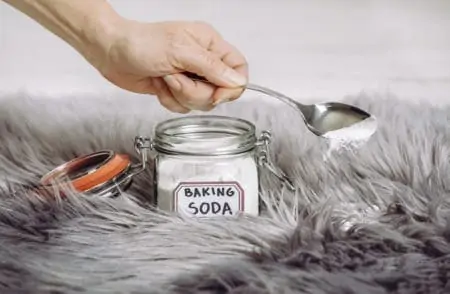
Baking soda does remove nail polish. You can apply it directly to the carpet, mix it with water and spray applicate it, or add vinegar for increased cleaning power.
Avoiding a Mess
Now that you know how to remove nail polish from a carpet, there’s no need to panic the next time it happens. Cleaning the spill as it happens is the best way to prevent a huge mess. Follow the first guide to successfully remove it and finish by cleaning the area to restore the fibers.
Rubbing any stain or spill on a carpet will push it further into the fibers. You might successfully remove it, but walking on or vacuuming the area can cause it to reappear with a vengeance. Reappearing stains are much tougher to remove since they’ve already been through the process of cleaning and drying.
If you don’t have any acetone-free nail polish remover on hand, there are other effective items you can use. WD-40 can quickly remove nail polish. The same goes for shaving cream, which is excellent for dark-colored carpets.