Cleaning a carpet usually involves vacuuming the living daylight out of it. However, you’re often left feeling like it wasn’t enough. There is still pet hair in the fibers and small dust particles — plus that musty odor that won’t go away.
It’s time to start cleaning in an easier but more efficient manner. Enter cleaning hacks.
Carpet cleaning hacks are plentiful, but which ones are worth trying? From effective deodorizing to mystery stain removal, there’s a hack to use.
Key Takeaways
- Remove pet hair from carpets using a window squeegee or lint roller.
- Blot stains instead of rubbing them to avoid pushing them deeper into carpet fibers.
- Use an iron and a damp cloth soaked in a vinegar-water solution to remove dried stains.
- Use baking soda to absorb pet urine and odors from carpets, and vacuum after a few hours or overnight.
Top Carpet Cleaning Hacks
These are the 15 best carpet cleaning hacks we’ve found:
1. Squeegee Pet Hair Away
Pet hair can be tricky to get rid of. If you have a long-haired pet, you might feel like a victim of pet hair. Fine hair clings to the carpet fibers, making it difficult for even a vacuum to remove.
An effective way to remove stubborn fur is by using a window squeegee. This smart device is designed to dislodge sticky substances from almost any surface.
Wet the squeegee slightly and glide it with the fibers — the hairs will follow. Next, collect them and throw them away.
2. Lint Rollers
Lint rollers are usually meant to remove loose hair from clothing. However, these rollers are also highly effective on carpets. Due to the stickiness, they will grab onto smaller particles, such as dust, better than a vacuum.
You might think using a lint roller to clean a carpet will take hours. However, that’s not necessarily true. It might not be the quickest fix, but it’s useful for removing fibers the vacuum may have missed.
This hack is also excellent for carpeted stairs. Vacuuming stairs can be tricky, so using a lint roller is helpful to get a quick clean.
3. Always Blot, Never Rub
Oh, shoot, you spilled red wine on your cream-colored carpet — will this ever come out? If you act fast, that spill should be out in no time.
When you accidentally spill something on a carpet, it’s crucial to get the fluids away first. If the spill soaks into the carpet fibers, it can be nearly impossible to get out.
So take a clean cloth or towel and begin to blot lightly. You want to start at the edges and work towards the center. Blotting inward to the edges will cause the liquids to spread, enlarging the stain.
You might feel inclined to rub the spill away. However, this could push the stain into the fibers and spread it. As you blot, instead, you carefully squeeze the liquid out of the carpet and into the cloth.
4. Iron Stains Away
A dried stain can be nearly impossible to remove, but there’s a solution. You can use a hot iron to remove dry stains carefully.
First, vacuum the area thoroughly to eliminate any loose dirt or hard particles. This will ensure that all of the focus will be on the stain.
Then soak a cloth or towel in a solution of one part vinegar and three parts water. Apply the wet cloth to the stain and leave it for up to five minutes. The vinegar will help to dissolve the stain.
Place the heated iron directly on the damp cloth. Rub it in circular motions applying slight pressure. The stain will transfer onto the cloth as you press down, similar to a temporary tattoo.
5. Eliminating Oil Stains
Oil stains on a light-colored carpet? Did you just cringe? This is undoubtedly one of the most frustrating stains to deal with. Unfortunately, you need a little more than blotting.
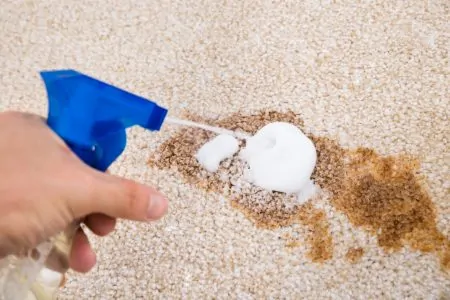
Baking soda is efficient at absorbing liquids and odors. But many people don’t know that it’s also excellent at retracting oil from a carpet (1).
Apply a generous amount of baking soda to cover the entire stain. Leave it overnight to soak up the oil — the powder will form a dry crust once it’s full. This is easy to vacuum when you’re finished.
When the baking soda has removed most of the oil, use a cloth to dab the rest of the stain away.
6. Getting Rid of Pet Urine
Pet urine on carpets can be detrimental. If it gets soaked into the padding, it could ruin the carpet with an awful odor. Not to mention the horrible stain you’d have to look at daily (2).
The best way to avoid a disaster is by solving the problem when it happens. Use this hack if you’re training your new pup or your old pal isn’t making it out in time.
As we saw in the hack above, baking soda effectively absorbs liquids. It’s also excellent at absorbing odors.
Apply enough baking soda to cover the area entirely. Then allow it to absorb the urine and odor until the powder starts to dry. Blot away the rest of the mess and finish with a vacuum to remove excess powder.
7. Nail Polish Spill? No Problem
When removing nail polish from our fingernails, we usually use acetone. However, this shouldn’t be the first thing you grab when spilling polish on your carpet, as this could damage it.
An effective way to remove nail polish from a carpet instead is by using rubbing alcohol. Allow the polish to dry on the carpet, then use a blunt knife to scrape off as much of the dry polish as possible.
Apply a small amount of rubbing alcohol to a cloth or towel and gently dab the stain. Continue until the nail polish dissolves — the cloth will absorb the excess polish.
You could also use paper towels if you’re afraid of ruining the cloth.
8. Shaving Cream for Colored Carpets
Dirt and mud often find their way inside, especially if you have children or pets. This can cause skid marks across your carpet, which can be frustrating to look at.
Shaving cream is effective at removing dirt stains without damaging your carpet. You can use any kind, so you don’t have to run to the store to buy any specific brand.
If it’s a dry stain, vacuum it first to remove any loose grains. Then apply the shaving cream to cover the stain entirely. Allow it to sit for a minute or two, rub it with a sponge and wipe away the excess.
You can use shaving cream on any carpet, but it’s particularly great on colored carpets. Another benefit is that it leaves your carpet soft and fluffy.
9. Smelly Carpet? Not for Much Longer
After spending significant time vacuuming your carpet, you might be disappointed by the lingering odor. As effective as a vacuum can be at removing dirt and crumbs, it won’t get rid of odors.
For this, you’ll need to rip out another packet of baking soda. Next, sprinkle the entire carpet with a blanket of baking soda — it might look like a winter wonderland.
Leave the baking soda to rest on the carpet for a couple of hours (overnight if the odor is strong). When the time is up, vacuum the carpet thoroughly to remove all powder (3).
10. The Ultimate Carpet Odor-Eliminator
Tried the hack above, but the odor is still present? You’ll need something a little stronger to deodorize your carpet.
The following recipe includes borax, essential oil, and baking soda. Combine two tablespoons of borax with two cups of baking soda in a large container. Borax will kill bacteria and microbes that might be hiding in your carpet and causing the odor (4).
Add about 10 drops of essential oil and give it a good stir — if there’s a lid, close it tightly and shake. Choose an essential oil with a pleasant scent for everyone, including pets. Lavender is a popular choice since it gives the carpet a fresh citrus smell and doesn’t bother animals.
Apply the mixture the same way as we did in the hack above. Finally, allow it to sit for a couple of hours or overnight, and then vacuum thoroughly to remove the powder.
11. DIY Deep Cleaner
Deep cleaning your carpet can be tricky unless you have a carpet cleaning machine. It also often involves a special carpet shampoo that can be expensive and harmful to the environment.
Luckily, you can make your own solution that is just as effective and safer. For this, you’ll need the following:
- Six ounces of hydrogen peroxide
- Five drops of your favorite essential oil
- Two tablespoons of fabric softener
- Two tablespoons of dish soap
- One gallon of hot water (not boiling)
Combine the ingredients in a bucket and stir well. You can use this as a spot treatment or when you need to deep clean the carpet. You can also add it to a carpet cleaning machine for easy application.
12. Vacuuming Shag Carpets the Right Way
Shag carpets are becoming more and more popular. They’re soft and warm — the perfect addition to a cozy bedroom or hard floored living room.
However, the long and thick fibers can become a thriving spot for bacteria and microbes, which could lead to mold. It’s crucial, therefore, to clean it thoroughly. Unfortunately, though, that can be difficult since the fibers tangle easily.
So, the best way to clean a shag carpet is by vacuuming with the hose alone. Remove the shaft and floorhead altogether. You can also use the crevice tool if you have one.
It may take a while, but you’ll clean deep inside the fibers without damaging the carpet.
13. Two Ways to a Fluff Carpet
Heavy furniture can quickly cause dents and flat spots on a carpet. Foot traffic can also affect carpets negatively. As a result, carpets in a busy place might also look flat after a while.
You can try one of these methods when you want to fluff your carpet. For the first hack, place ice cubes in the flat spots and wait for them to melt. Blot the water out, put a clean towel on top, and iron the towel until the area is dry.
The second hack requires a few household ingredients. Start by mixing equal parts of vinegar and water in a spray bottle.
Spray the flat area and sprinkle with baking soda. Then allow the powder to absorb the solution. Finally, use a spoon to loosen the fibers by running it sideways on the carpet.
This hack will help to restore the original texture of the carpet fibers.
14. Easy Way to Remove Gum
Gum on the carpet? Try this hack before you reach for the scissors to cut the gum out.
Take one or more ice cubes and place them on the gum. It will begin to freeze and harden. With the change in texture, you can easily slide it off the carpet.
15. Protect Your Carpet
Carpets in high-traffic areas are more prone to damage and stains. So, if you want to preserve your carpet, we suggest you put an area rug on top.
A rug on a carpet? Sure, it sounds weird, but it will help to protect it. Whenever guests come over, remove the rug, and your perfect carpet will shine.
FAQs

How Can I Make My Carpet Look New Again?
The best way to make your carpet look like new again is to perform a deep clean to revitalize the fibers regularly, and always spot clean any stains as they happen. The longer you leave them, the harder they are to remove.

What Stains Cannot Be Removed From Carpet?
There are several stains that cannot be removed from carpet easily. The first is blood, the second is red wine or coffee, and finally, fizzy drinks like Coca-Cola are challenging to remove. The secret is to deal with all these stains when they are fresh.

How Long Should You Leave Baking Soda on a Carpet?
You should leave baking soda on a carpet for a maximum of 24 hours. It’s essential that while the baking soda is down, no one walks on the carpet. Brush up the baking soda once the timescale has elapsed, and try to avoid vacuuming the soda because it will damage your motor.

Is Hot or Cold Water Better for Carpet Stains?
Cold water is better for carpet stains because it cleans without opening up the fibers. Hot water opens up carpet fibers and causes the stain to embed deeper, making it harder to remove.

How Long Until You Can Walk on Carpet After Cleaning?
You should wait 24 hours before you can walk on carpet after cleaning. It gives the carpet enough time to dry and allows the fibers to settle into their natural position.
Carpet Cleaning Made Easier
Cleaning a carpet doesn’t have to be exhausting or expensive. Using hacks to find a smarter way around specific tasks can be very beneficial.
One last tip? Always test any solution in a small inconspicuous area before applying it to the whole carpet. This will ensure you don’t cause any damage to the fibers.